When the COVID pandemic hit, 75% of the American workforce had never worked from home. In the first three weeks when lockdowns started, the percentage of U.S. employees working from home doubled.
It was pretty unfamiliar territory for most, but we all learned pretty quickly that you could, in fact, work more productively and collaborate from home, ditch meetings for more efficient asynchronous work, and save wasting an average of 54 minutes per day commuting. All while spending more time with family members and achieving a better work-life balance.
If you're reading this, you've probably decided you're all-in on making remote work permanent. In fact, 97.6% of workers would, so there's a pretty good chance.
It's never been easier to find a remote job or for remote-friendly companies to attract remote employees which is a win-win scenario for employers and employees. Armed with a newfound work-life balance, 1 in 3 remote workers today plan to quit their job if they could no longer work remotely. Most job seekers simply don't want to work any other way:
"I believe we’re nearing a sea change in how we work. It’s easy to point to stratospheric rent prices in major urban centers, soul-crushing gridlock, and shifting mindsets in what society values in a career as reasons for turning to remote work."
— Darren Murph, Head of Remote at GitLab from his post Why we believe all-remote is for everyone
Most companies have committed to a hybrid or fully remote model and are deciding to not renew office leases. Not just small companies either, some of the largest employers in the world have coalesced around remote work, including all the familiar names: Square, Mailchimp, Twilio, Culture Amp, Figma, Dropbox, Stripe, Spotify, Salesforce, Amazon, Apple, Facebook, and Google.

Why you need a great home office workspace
It's pretty clear now that remote work is here to stay. But that doesn't mean it's without its challenges! Many remote workers report difficulty maintaining focus/productivity, blocking out distractions, and overworking. These challenges are particularly tricky for those who are new to remote work.
For many people, the transition to remote work involved setting up an impromptu workspace on the couch or at the dining table. If you've ever worked from a makeshift workspace for more than a few days, you've probably experienced how uncomfortable and distracting this can be. Especially if you have housemates or children!
One of the highest-leverage things you can do for long-term remote work is to spend some time correctly setting up your home workspace. It doesn't matter if you don't have a spare room for a home office — a dining room is just fine! The goal here is to create a dedicated work environment that you feel comfortable and productive in, where you can do your best work as efficiently as possible. This includes:
- Minimizing distractions
- Sticking to a routine
- Putting clear boundaries in place
- Working in comfort
- Maintaining a balance between work and family life
- Communicating and collaborating well
- Gathering your ideas and thoughts
- Maximizing productivity
“I have a firm belief in the impact of our workplace on our behavior. Large companies invest millions of dollars into strategically designing offices that will fuel productivity and innovation, yet we’re plopping ourselves on a couch and expecting the same results.”
— Laurel Farrer, CEO, Distribute Consulting
If your company doesn't offer a remote work home office budget or stipend already, there's no harm in asking! Early in the pandemic, larger companies like Spotify announced that it would give its newly remote employees $1,000 to set up their home workspace or home office because they understand that even a small investment goes a long way to increase employee productivity and happiness. When chatting to your manager, try to emphasize that a small budget is mutually beneficial: even if it's just a 1% improvement in productivity, it will pay off 10x in the long run.
To help you get started on your journey to productivity nirvana, we've put together a list of essential (and some not-so-essential) home office upgrades to help make your work, life, and work-life balance just a little bit better.

A dedicated office desk
One of the best things about working remotely is you only really need a computer and an internet connection. If you don't have a spare room to designate as your remote office, that's totally fine! In fact, only 30% of remote workers do. All you need is somewhere private, quiet, and free from distractions so you can focus and do deep work. This can be in your living room, dining room, or bedroom — anywhere with good natural light.
Wherever you choose to work, it's important to set up a permanent desk that you don't need to pack down each day. This also acts as a barrier between work and your personal life, a line that gets even more blurry when you're working from the dining table. With a dedicated office desk, you can get comfortable and minimize distractions much easier.
You may have recently seen a growing trend in standing desks, driven largely by the idea that "Sitting is the smoking of our generation". These are desks that are height-adjustable so you can work in a chair or standing up, which has been proven to decrease discomfort over time. As a result, many companies offer standing desks as part of their employee benefits to promote productivity and energy levels.
Regardless of whether or not you choose a standing desk or a not (they're generally more expensive), what matters is that you make sure there's enough surface area for your equipment and anything else you may need at hand. As a general rule, you want to look for a desk that is at least 60cm or 24" deep so you have enough room to place a monitor and wireless keyboard on your desk. Anything less than that and you're likely going to be too close to the screen which can result in poor ergonomics and eye strain.
Best budget office desk
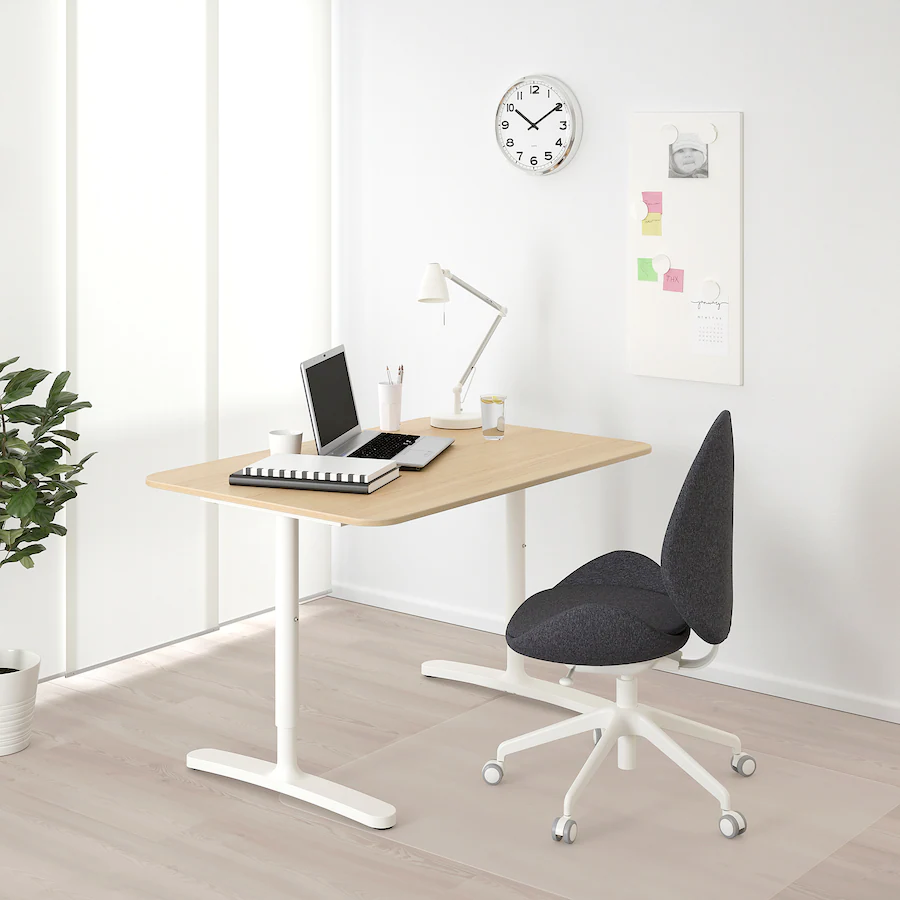
IKEA Bekant Desk — $199
If you're looking for a super solid and quality desk on a budget, you can't go wrong with this desk. It comes in a few different colorways to match your home office and adjustable leg heights. We love it because it has built-in cable management underneath, which makes it easy to tidy everything up.
Fun fact: this is actually the desk I use day-to-day. It's great.
Best budget standing desk
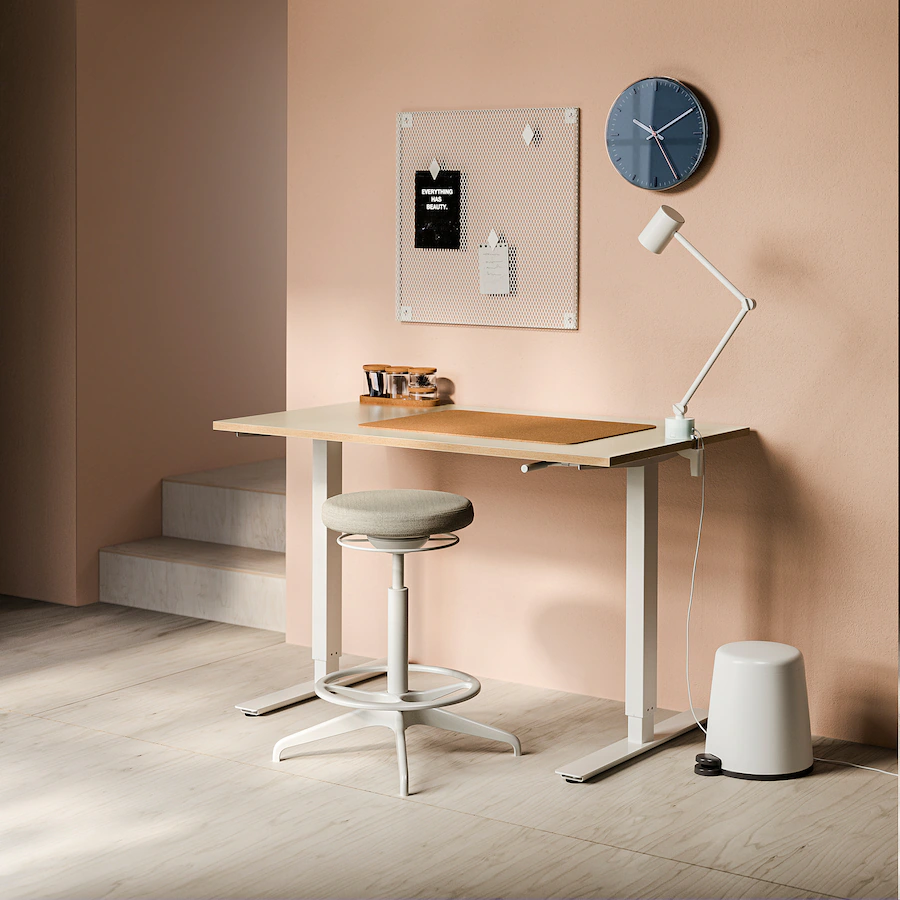
IKEA Skarsta / Trotten Sit/Stand Desk — $249
Probably the cheapest standing desk you'll find, it comes with a crank handle to adjust the height.
We love it because it's a super solid desk with a paired-back, minimal and industrial aesthetic. You can put this desk in any room with any furniture and it'll look great. At 120cm x 70cm, it's also large enough for dual monitors, if that's your thing.
Best high-end office desks

Eave Desk by MSDS Studio — $1,145
Look, we know this is a ridiculous amount of money to spend on a desk. However, if you're planning on using it for years or decades ahead, it might be worth the investment.
We love the soft edges and paired-back Japanese/Scandinavian minimalism of this desk. It has everything you need and nothing you don't.

Artifox Desk in White Oak — $1,790
This desk pairs a super minimal aesthetic with practical features. Made from solid white oak, it comes with a unique cable grid to manage cords and an interesting built-in dock system to customize it to your needs.
Best high-end standing desk

Branch Standing Desk — $699
If you're looking for a super-premium standing desk, this one from Branch is a great option. We love it because it's understated but incredibly high-quality. It has a super quiet electronic lift that remembers your preferred heights, as well as built-in cable management. You can even add in-desk power for an extra $160, which includes 5 outlets and two USB ports.

An ergonomic office chair
The type of chair you use is arguably the most important piece of equipment in your home office. Investing in a high-quality ergonomic chair with back support and different adjustments can increase productivity by 17%.
Considering you'll likely be spending 7-8 hours per day in your home office chair, your posture and comfort are important to maintain. Good-quality ergonomic office chairs will last for years and are worth the investment.
You may not notice, but small discomforts and shuffling distracts your focus and can impact your mood. Even a comfortable chair can be bad for you if it's not ergonomically sound. We suggest investing in the best ergonomic office chair you can afford, but that doesn't mean you have to go overboard. Here are a few good options for every budget.
Best budget ergonomic chairs

IKEA Markus — $199
A common Aeron-on-a-budget option, the Markus desk chair is incredible value and super high quality. So much so that it comes with 10-year warranty. We love the high back design and lower back support. While it's not as adjustable as some of the high-end ergonomic office chairs, it's one of the best choices and most popular desk chairs on the market because its price-quality ratio is off the charts.

Alera Elusion Series Mesh Mid-Back Chair — $180
This ergonomic chair ticks all the boxes. For its price, it's incredibly adjustable and it's the perfect budget option. While it doesn't have the same quality of materials and refined finish as higher-end options, you won't find a cheaper chair for this level of quality. You can pick your color as long as it is black.
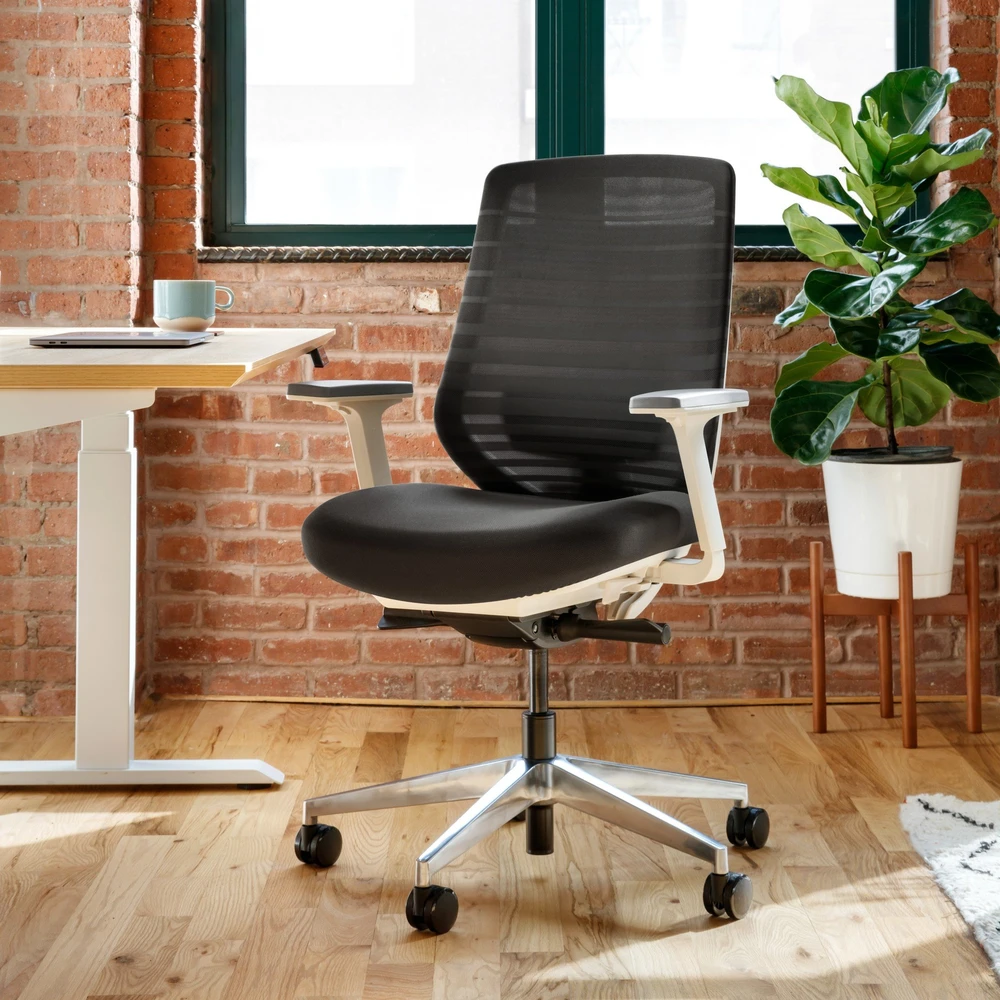
Branch Ergonomic Chair — $329
Another great budget option, this ergonomic chair from Branch is highly adjustable and has a super thick high-density cushion that is comfortable even after an 8 hour day. We think it's the perfect bridge between the budget chairs above and super expensive high-end chairs. It also looks great.
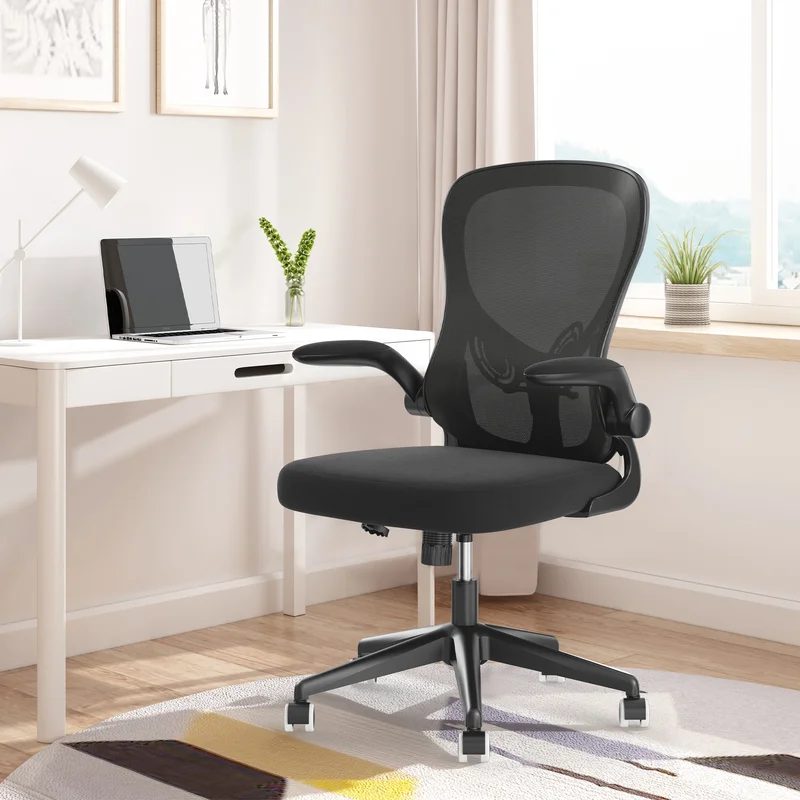
Wayfair Ergonomic Polyurethane Task Chair — $167
A great no-frill task chair that comes with ergonomic features and lumbar support. This chair from Wayfair also comes with a 1-year warranty.
Best high-end ergonomic chairs
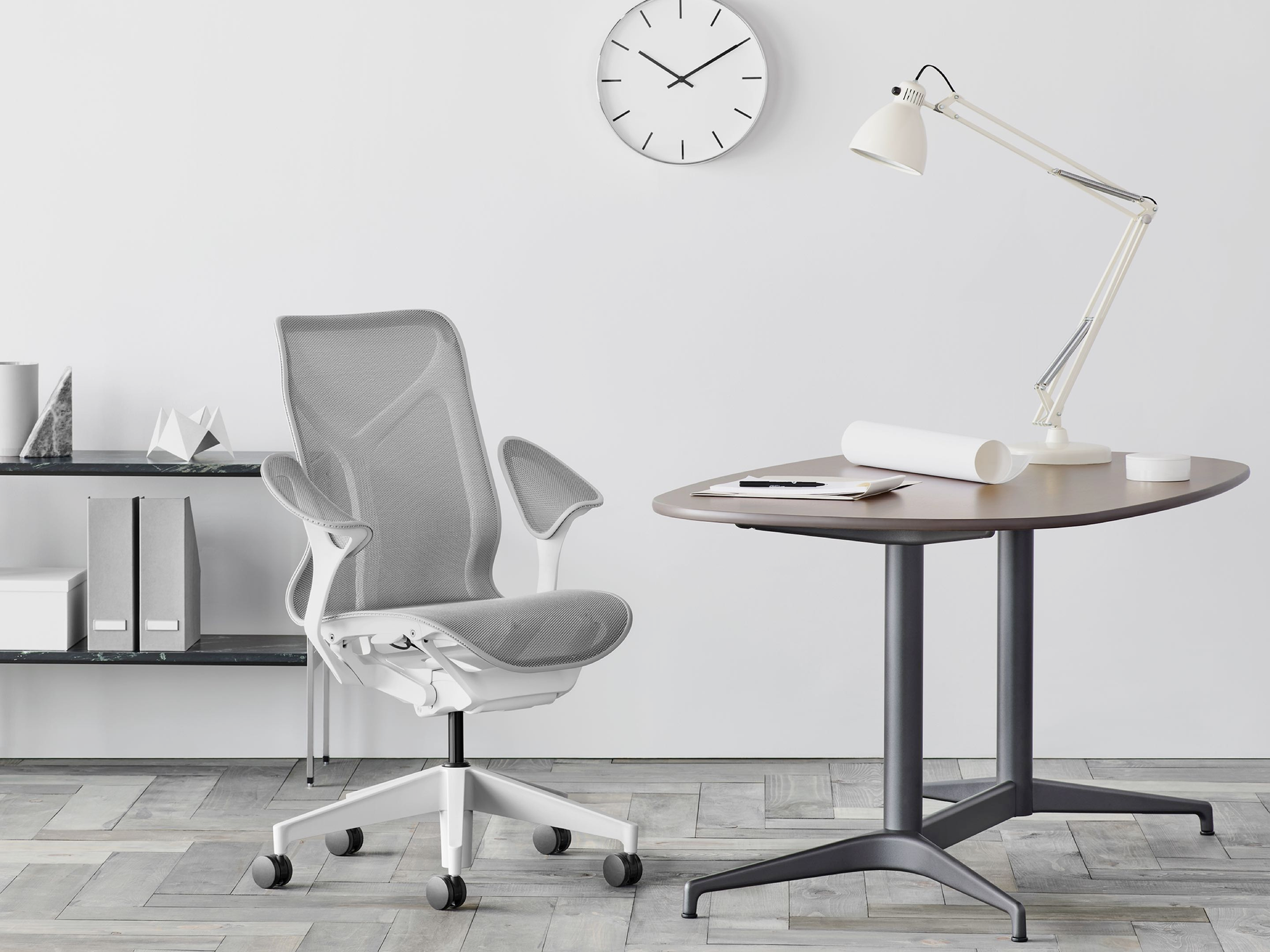
Herman Miller Cosm Chair, Mid Back — $1,395
The Cosm Chair is not only one of the highest-quality ergonomic chairs you can buy, but also looks great. With super breathable mesh, this chair is extra comfortable if you live in a warmer climate. We like the mid-back chair the most, which offers a little more support, but they also have a high-back version.
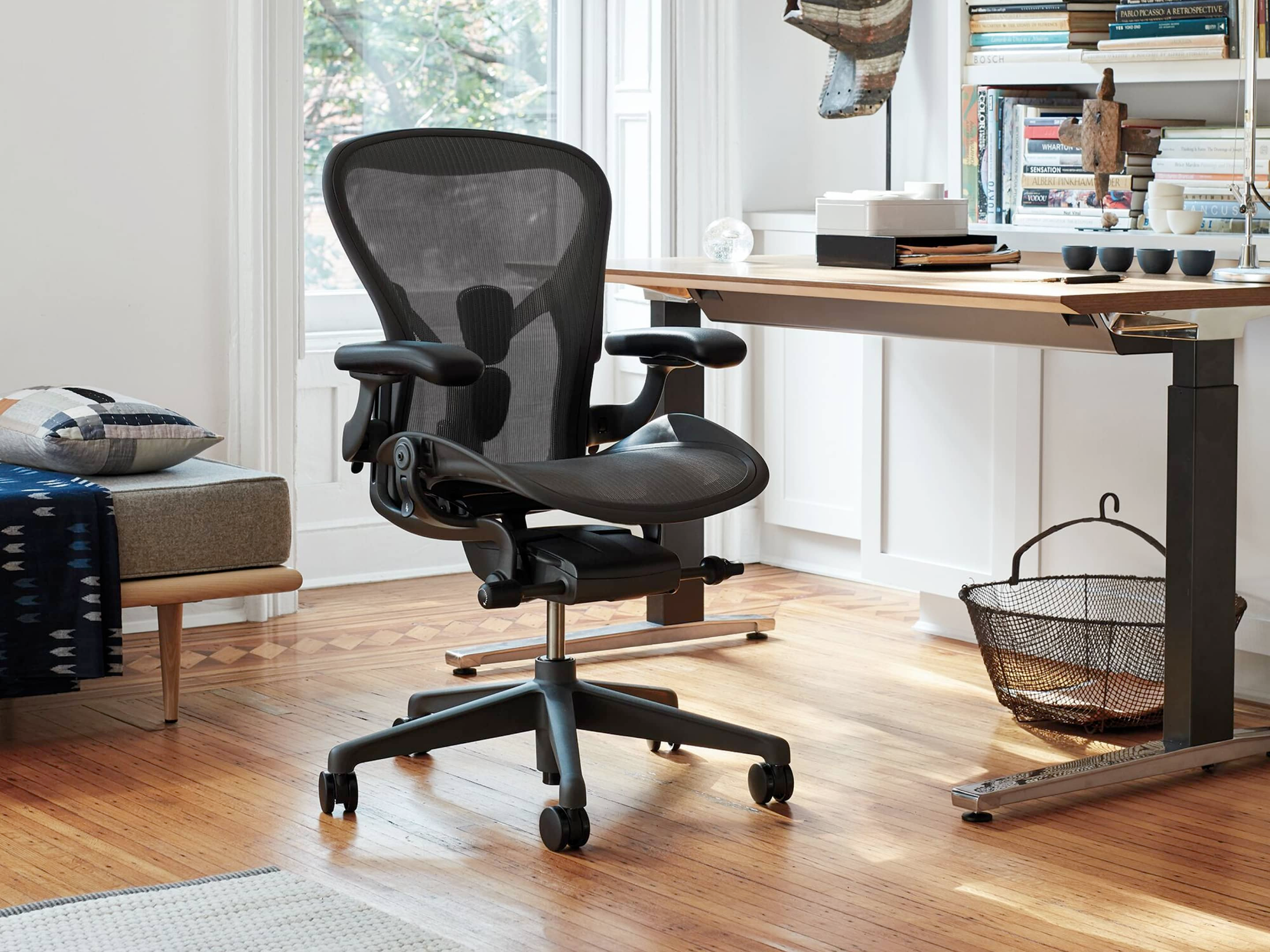
Herman Miller Aeron Chair — $1,495
While the Aeron Chair was first launched in 1994. Its hefty $1,000+ price tag didn’t stop the so-called “Dot-com Throne” from becoming a bestseller and it's been an office staple since. Herman Miller have continued to update and improve the design over the years, and it remains (in our opinion) the best ergonomic chair on the market. It's definitely the most iconic.

Humanscale Freedom Headrest — $1,249
If you're not drawn to Herman Miller designs, you can't go past this ergonomic chair for quality. It's described by The New York Times as "the gold standard in office seating."

Noise-canceling headphones
If you haven’t used noise-canceling headphones before, they're definitely a great addition to your home office space. If you're working from home, there's still likely to be distractions all around you — noisy neighbors, kids, traffic — and being able to block them out reduces the chance that these interruptions will pull your focus away from your work. Music has been shown to improve productivity, cognitive performance, and motivation. Pair this with Brain.fm or focus playlists on Spotify and you'll have remote work superpowers.
Best budget noise-canceling headphones
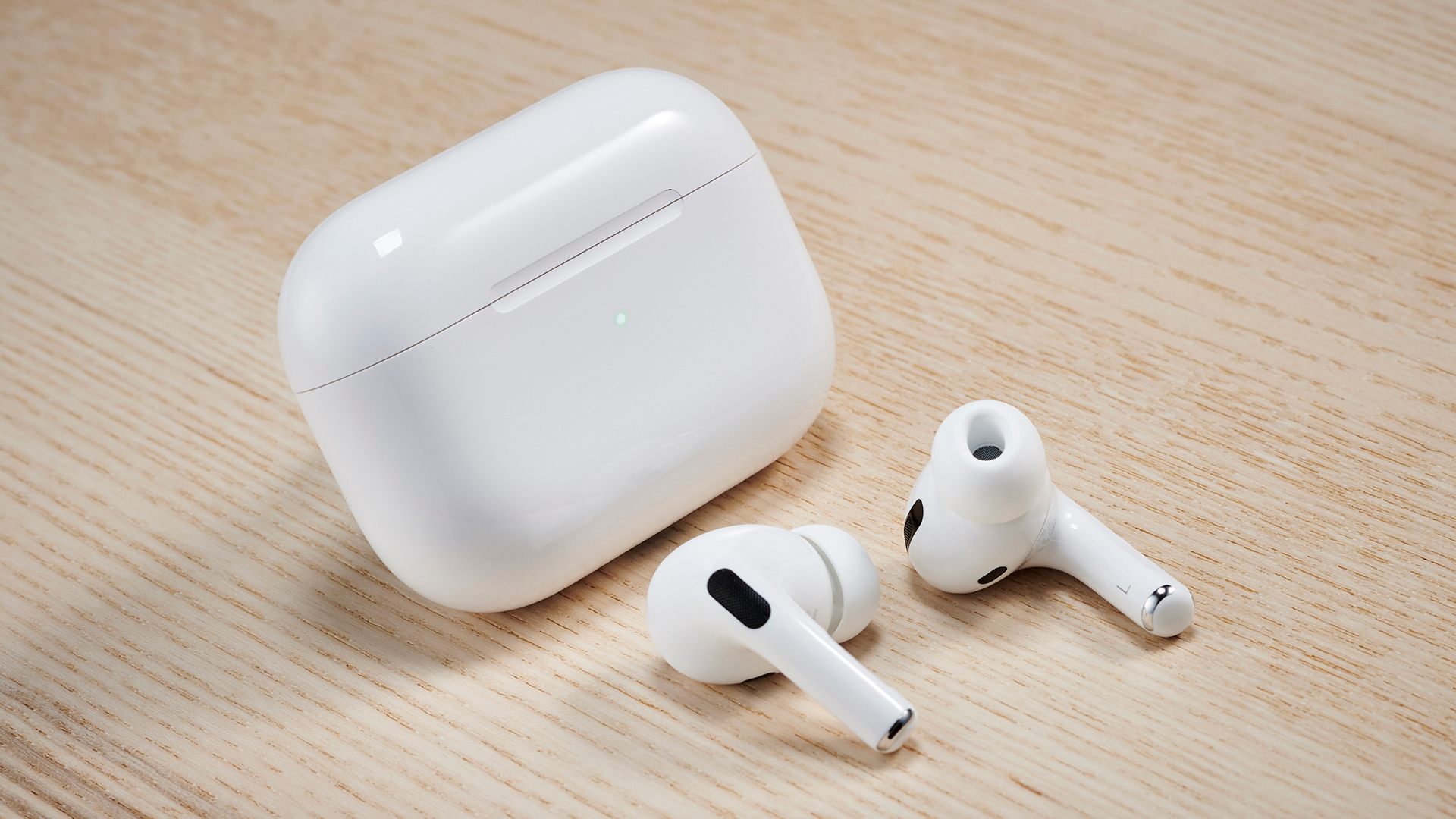
Apple AirPods Pro — $249
While AirPods aren't technically headphones, we've included them because they're one of our favorites. There's a reason AirPods are Apple's second best-selling product of all time — they just work. If you haven't the noise-canceling capabilities of these before you're in for a great surprise.
We love these because you can use them for work and they're small enough to take with you outside of work without being a hassle. The battery life is surprisingly impressive as well. I own a pair of Bose QuietComfort 35 II, which I love, but I rarely use now because I love my AirPod Pros so much.

Bose QuietComfort 35 II — $179
If you're after the perfect balance between quality and affordability, you can't go past these wireless headphones. Even though the competition is stiffer today and Bose has released the QuietComfort 45 and the 700, the QuietComfort 35 II headphones are still our favorite and you can pick them up much cheaper these days because they're an "older" model. As well as being extremely comfortable, they look great, are incredibly light but still high-quality, and the Active Noise Cancellation (ANC) still holds up against competition 3x the price.

Sony WH-1000XM4 — $249
These are another industry-leading headphones from Sony and are the main competition to Bose. They have an impressive 30-hour battery life and quick-charging (10 min charge for 5 hours of playback). They also look great with a sleek minimal design that won't make you feel like you're wearing alien technology.
Best high-end noise-canceling headphones

Bowers & Wilkins PX7 — $399
Bowers & Wilkins specialize in speakers, but they make some incredibly nice-looking noise-canceling headphones as well. If you're after a more high-end pair that look great on your desk as well, definitely check them out.
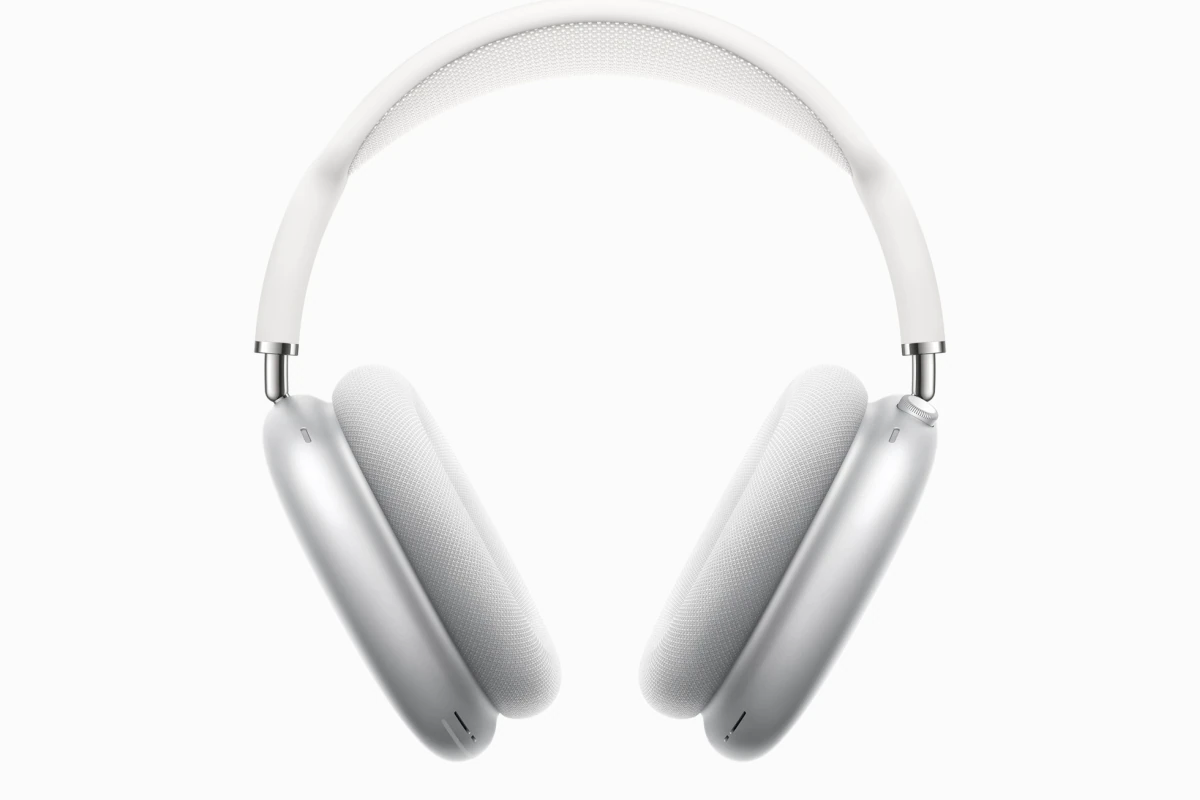
Apple AirPods Max — $549
No one was surprised by the announcement of the AirPods Max after the success of the original AirPods. At the risk of sounding like an Apple fanboy (of which I am), I've included these on this list because they're a super high-quality option. Yes, they're expensive, but the AirPods Max delivers richer, more detailed sound than lower-priced competitors from Bose and Sony.
They also look great on your desk, if that's important to you.

Quality desk speakers
If wearing headphones all day doesn't appeal to you much, investing in good-quality office space speakers is a great way to get all the benefits of listening to music while you work. Here are a few options that won't break the bank and some that will.
Best budget desk speakers
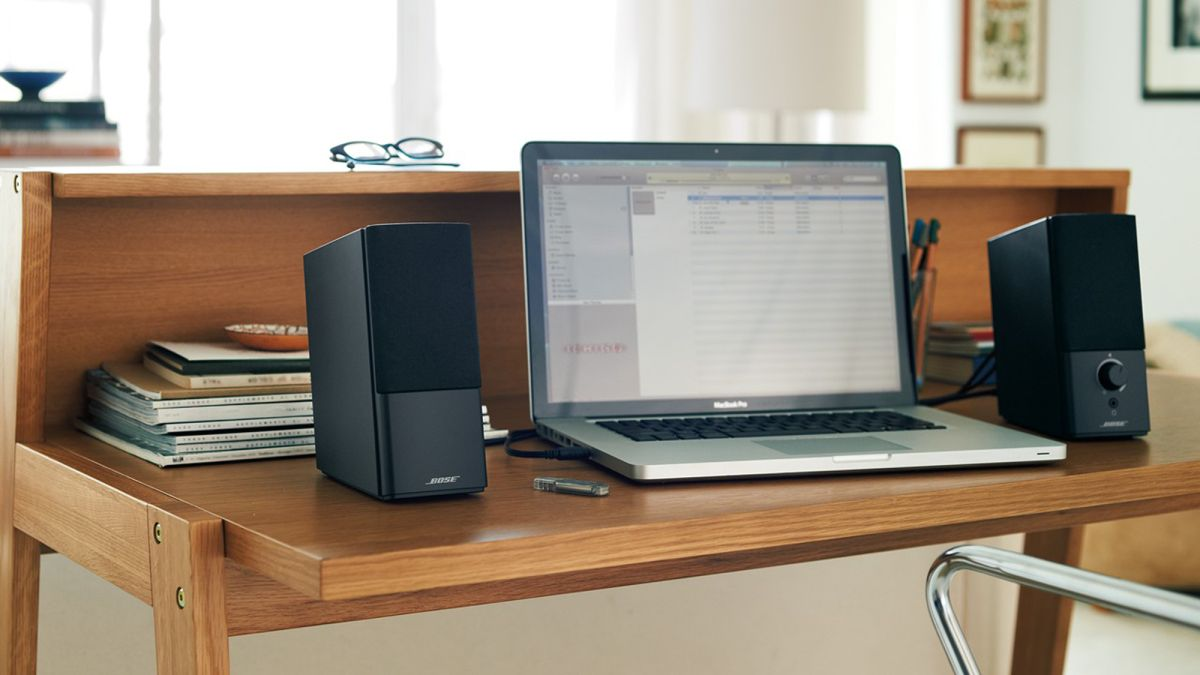
Bose Companion 2 Series III — $149
If you value excellent sound and are looking for a budget option, you can’t go past these desktop speakers from Bose. They’re small and unobtrusive, but pack some powerful quality for their price, producing good bass without being too large or needing a subwoofer. They lack the latest tech and have been around since 2013, but that’s a testament to their quality — they’re popular for a reason.
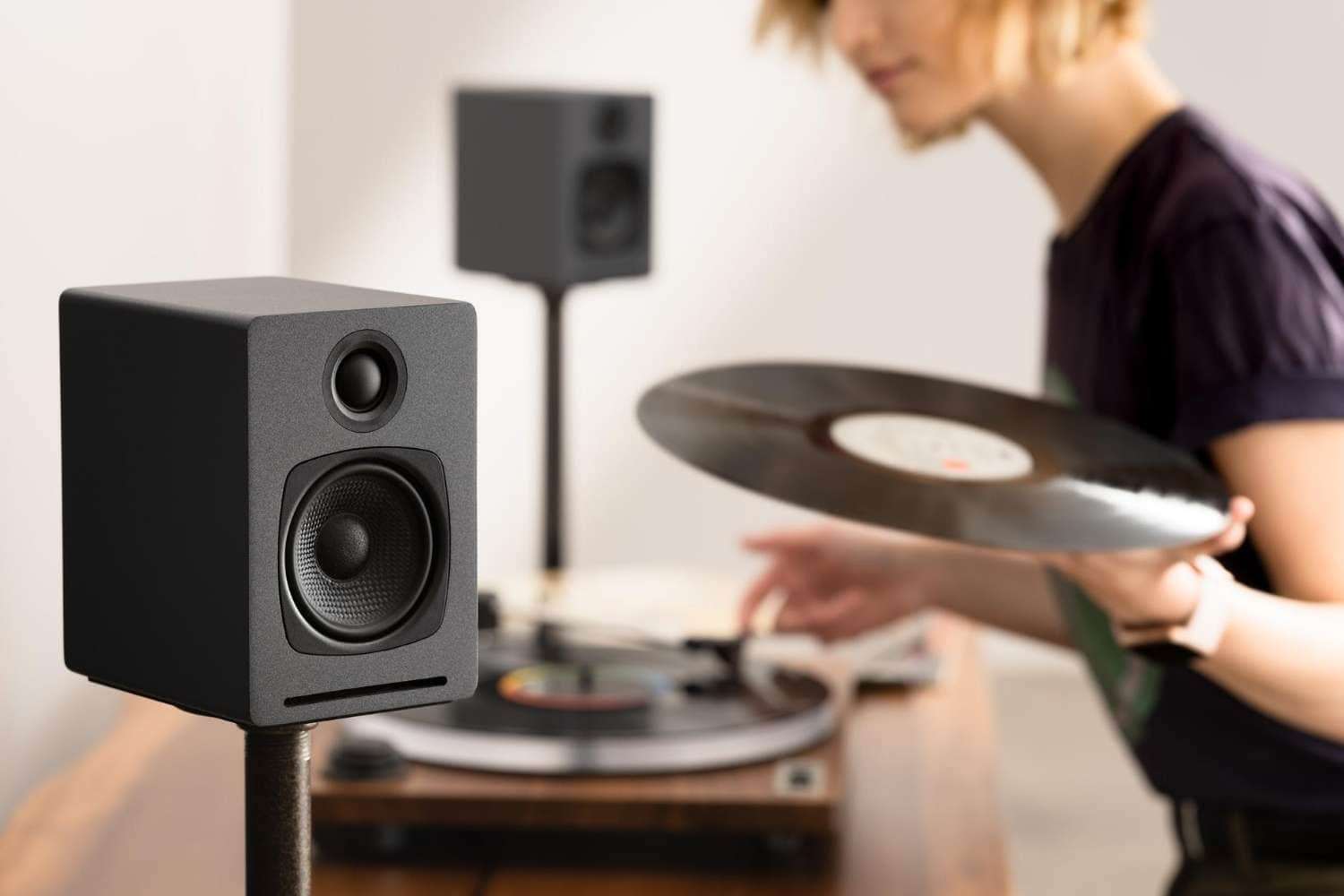
Audioengine A1 — $199
The Audioengine A1is a traditional two-speaker setup made for a smaller room or studio apartment. For $199, they’re perfect for a home office and deliver great quality sound. They have an understated classic look and don’t take up too much space.
Best high-end desk speakers

Audioengine A5+ — $399
For years, Audioengine’s A5+ powered speakers have been regarded as some of the best desktop and bookshelf speakers you can buy. They deliver phenomenal sound in the same simple, classic styling as the A1s and have bluetooth so you can stream music without wires. They’re a little larger, and designed mainly as a bookshelf speaker, but are small enough to fit on a home office desk.

Fast and up-to-date computer
For most work-from-home jobs, your computer is the most important tool. As such, investing in a fast and up-to-date computer makes a huge positive impact on your productivity. A fast computer can shave a few seconds off of the hundreds of tasks you perform daily and could save you a few hours every month, while a slower computer not only restricts your productivity but can be a source of frustration and negatively impact your mood.
If you are considering working remotely for a new company, you may wish to ask in the interview process whether they provide one for you or offer a stipend for you to purchase one yourself.
If you are considering a new remote job, you may wish to ask during the interview process if they provide you with a computer or if they offer a stipend to purchase one yourself. Most employers do. If your employer does not provide this, like office furniture, we recommend making the investment as it not only has a dramatic effect on your work but also your wellbeing and mood.

Apple MacBook Air — From $999
There are no PCs or Chromebooks on this list, but let us explain why. Apple’s M1 chip has been an absolute game-changer for personal computers and the Apple Air with the M1 chip has the speed and battery life to beat the best PCs.
If your job doesn’t call for super heavy graphic processing or video editing, this computer will handle everything better than competitors that are twice the price. While $999 is not cheap by any means, the productivity gains you can benefit from are worth the price tag.

Apple MacBook Pro — From $1,999
The new MacBook Pros with M1 Pro and M1 Max chips are the fastest laptops with some of the longest battery life you can get. Apple took a big bet moving away from using Intel processors and it has paid off.
If you don't need a CPU-heavy video editing and graphics workstation, the MacBook Pro is probably a bit overkill. It’s not cheap either, with pricing starting at $1,999. However, if you’re going to make the investment, we suggest opting for the 16-inch size. With the larger screen, you can comfortably use it as a “secondary” screen to the main monitor on your desk.

High-quality wireless keyboard
A good quality wireless keyboard will make a subtle, but noticeable difference to your productivity and speed. If you’ve been used to a particular keyboard for some time, switching will take some time getting used to, but it's an easy way to boost your productivity and typing speed.

Logitech MX Keys — $99
This is a great wireless keyboard for office use and is incredible value for only $99. We love it because it’s subtle, looks good, and comes with wireless connectivity that allows you to pair it with up to three devices and quickly switch between them. It also has a backlit keyboard, which is not common and useful if you’re working at night.
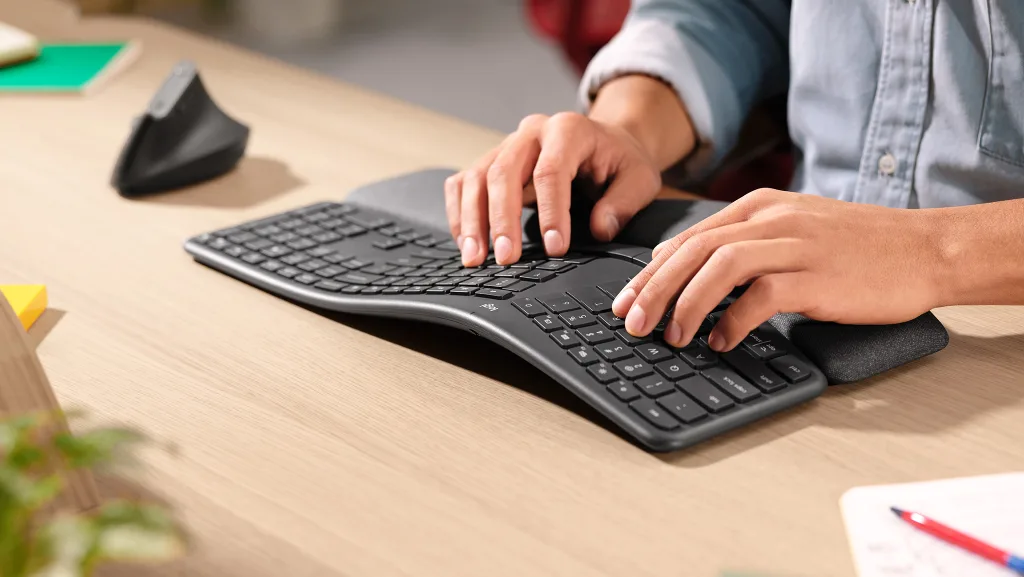
Logitech ERGO K860 — $129
For a slightly more ergonomic option, this option from Logitech might take some getting used to, but its curved split layout reduces wrist strain and is very comfortable to type on once you get it right.

Razer Pro Type Ultra — $159.99
For the uninitiated, mechanical keyboards give you a more positive “response” to pressing keys. Razer is a company that is better known for making gaming keyboards, but their Pro Type Ultra is a great home office upgrade if you’re looking for a premium option. It comes with significant battery life (up to 214 hours) and is comfortable to use thanks to its quality and wrist rest.

External monitor
Do you really need a computer monitor? Yes, you do. Maybe even two: multiple monitors actually make a positive difference when it comes to productivity. Typically, you’ll spend about a third of your day in front of a computer screen.
If you’ve made it this far working from just your laptop screen, it’s probably time to invest in an external monitor. Think about it this way: if you have a lot of papers you’re working with on a project, would you rather work on a big conference table or an airline tray table? Having a large external monitor allows you to maximize space and productivity by allowing for more than one window to be visible at a time. This is helpful if you’re comparing two documents at the same time, for example.
You’ll also benefit from improved ergonomics. Investing in an external monitor for your home office setup allows you to adjust the viewing angle to better suit your seating position and sharper resolutions and bigger screen sizes make text easier to read. A computer monitor can increase productivity, reduce stress and time wasted switching between windows, and create a better environment for increased productivity.
Best budget external monitor

Dell 27 Monitor S2721HSX — $244.99
With a large 27-inch screen and adjustable stand, this monitor from Dell is a great budget option. While it doesn’t have the resolution of more expensive models, it’s perfect for office work and has a flicker-free screen with ComfortView, a feature that reduces harmful blue light emissions.
Best 4K external monitor
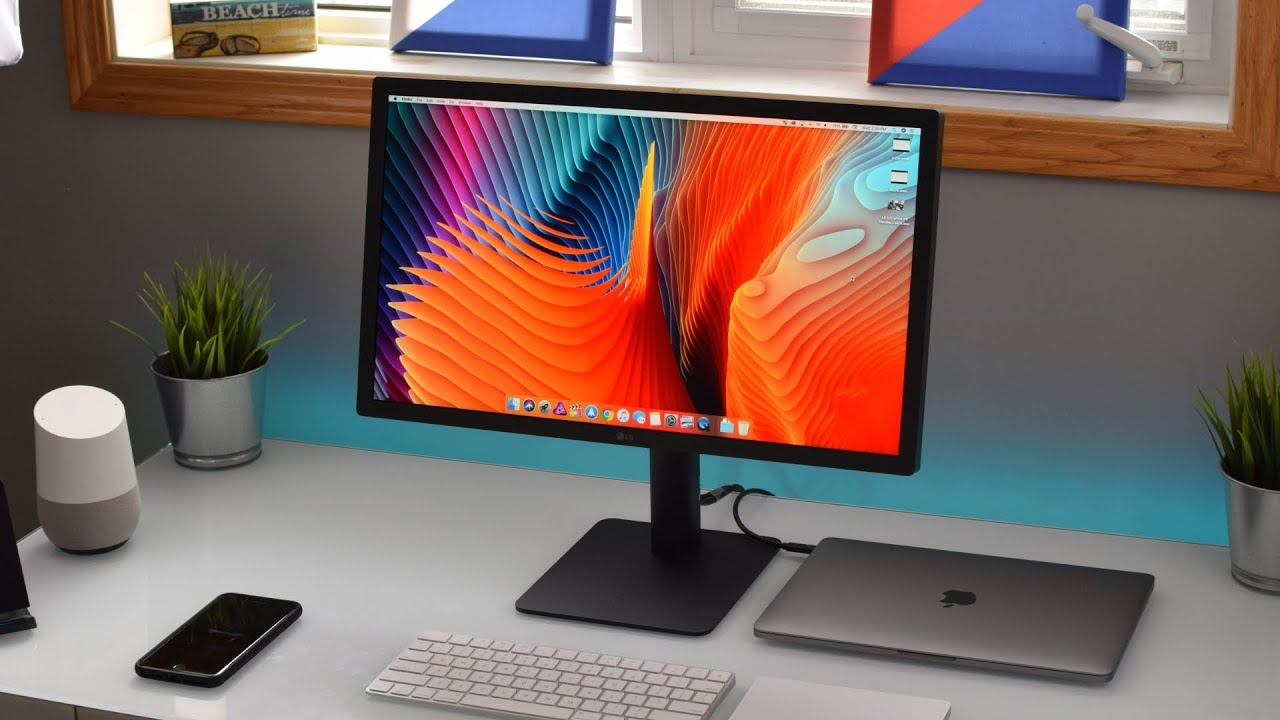
LG 27” UltraFine 4K Display — $599.99
The LG UltraFine has been the best-selling UHD monitor in the US for three years and for good reason.
We love this monitor because it is exceptional quality for the price, has a super crisp 4K display, and looks great. While $600 might be a lot for a monitor, this model is a mid-range offering compared with some high-end competitors, which often don’t look as good nor do they have the same features.

Monitor arm / Monitor desk mount
A monitor mount is a strong but flexible ergonomic arm that supports your external monitors, instead of a stand. Investing in a monitor arm is a great way to improve your desk ergonomics — they’re a relatively inexpensive and useful home office upgrade that allows you to position your monitor in a more comfortable working posture relative to your line of sight and seating position.
While most external monitors come with in-built stands, they’re often lacking in flexibility and extensibility. A monitor arm also frees up desk space and usually looks tidier and cleaner than normal monitor stands. Here are some great options.
Note: if you’re using a large monitor (27-inch+), make sure you check how much it weighs to ensure the monitor stand you are looking at buying can support it.
Best monitor arms

EVEO Single Monitor Desk Mount — $61.97
One of the most popular monitor arms on the market is this single desk mount monitor arm from EVEO. It’s not the cheapest, but it’s super high-quality and heavy-duty, supporting screens up to 32 inches. It has a wide range of adjustability as well and rotates up to 360° with a tilt range of +90 to -40°.

Fully Jarvis Monitor Arm — $129
For a little extra, you definitely can’t go wrong with the Fully Jarvis. This monitor arm looks great and is available in black, silver, and white, and does just about everything you need with built-in cable management. The 5-year warranty is great peace of mind.

Fast and reliable Wi-Fi router
When working remotely, you're completely dependent on your internet connection. There's nothing more frustrating and demotivating than an internet outage. We suggest investing a little more into your internet provider and Wi-Fi router to get the most reliable and fast internet possible, especially if you're video conferencing or dealing with large cloud-based files.
If you’re using an older or cheaper Wi-Fi router and experiencing lag or outages, it might be time to invest in upgrading to a modern, reliable, and responsive model.
Best Wi-Fi routers
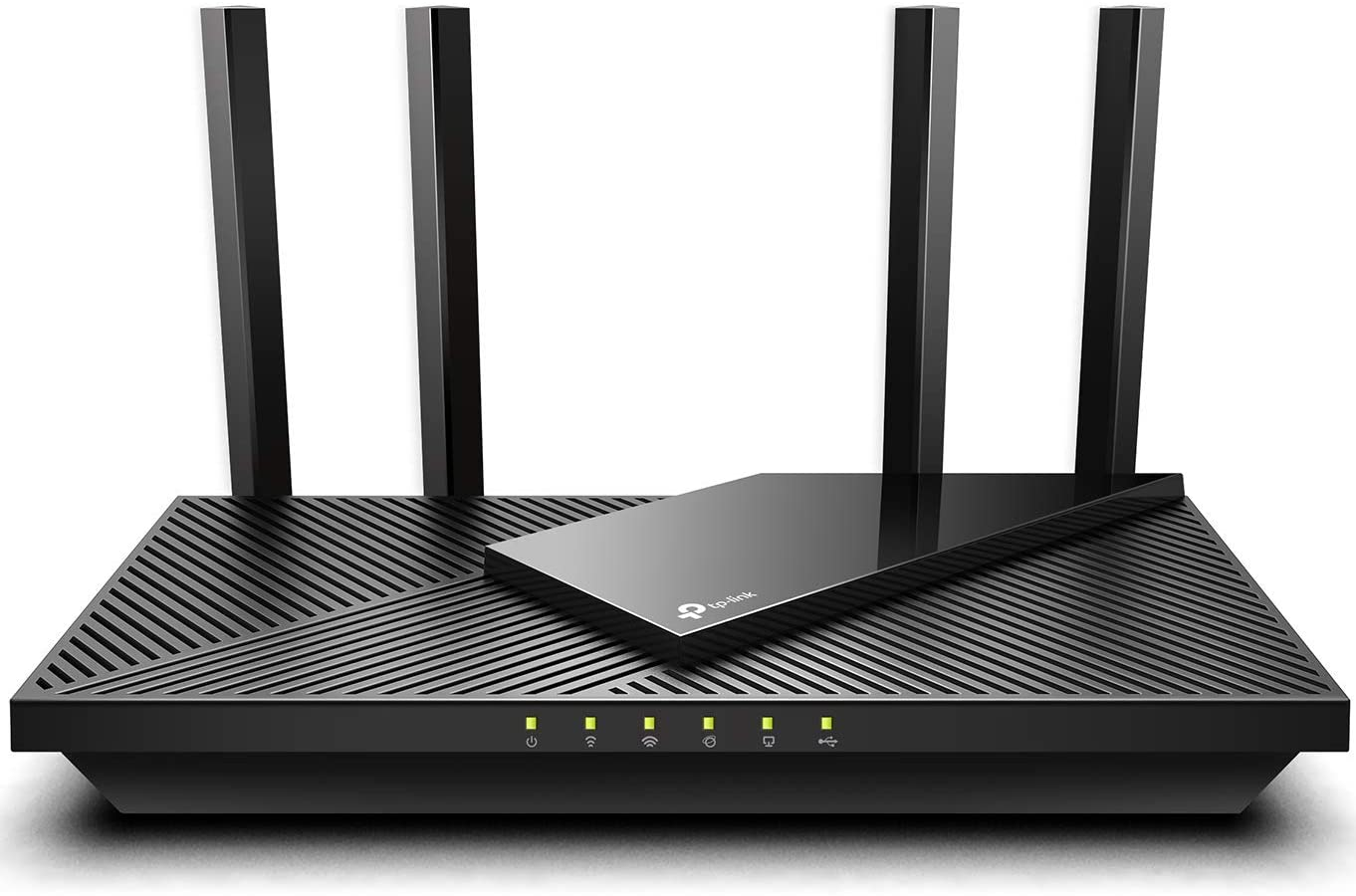
TP-Link Archer AX21 — $99
The TP-Link Archer AX21 is an entry-level, dual-band Wi-Fi 6 router that supports top speeds of up to 1,201Mbps (1.2Gbps) on its 5GHz band. If none of that makes sense, it can be summed up as “nothing fancy, but exceptional performance for the price” at less than $100.

NETGEAR Nighthawk R6700 — $129.99
For a little extra, the Nighthawk R6700 is undoubtedly fast, and well worth considering if you’re looking for a router with the fastest possible performance in its class, without spending too much. It can hold its own against much more expensive competitors but might even be overkill if you’re just setting up a home office.

High-quality USB microphone
If you spend a lot of time in remote meetings, a USB microphone is a worthy investment because it can more clearly capture your natural voice and come across with less background noise.
Best USB microphones

Blue Yeti USB Mic — $129
Blue Yeti is a well-known name for making top-notch microphones. Their USB mic is versatile and easy to use and comes with four different pattern modes for the best sound quality in almost any situation.

Shure MV5 USB Mic — $79
Similarly, the Shure MV5 is a non-nonsense USB mic that is perfect for home offices and remote workers. Like the Blue Yeti, it’s compact and designed to work right out of the box. For the price, it’s hard to fault the sound quality and it looks great as well.

Elgato Wave:3 — $149.99
For a slightly more premium option, the Elgato Wave:3 comes with excellent hardware quality and a built-in compressor. It’s a high-quality all-in-one USB mic perfect for the home office, even if you’re on a budget.

Dedicated webcam or camera
Similarly, if you spend a lot of time in remote meetings and video conferencing, sometimes the built-in video camera on your laptop just doesn’t cut it. Investing a little in better picture quality makes you look more professional and also allows you to position the camera adobe your monitor or in a more ergonomic position.
This home office upgrade can get expensive, especially if you need features like a fast frame rate or high resolution. Unless you have a specific purpose in mind such as YouTube or Twitch streaming, a budget option is likely to suffice.
It might be tempting to test out a cheap brand from Amazon or eBay, but you get what you pay for with cameras and we advise sticking to well-known brands.
Best budget webcams

Logitech C920s Pro HD — $69.99
There’s a good chance you’ve seen this webcam before. For the vast majority of use cases, the Logitech C920 is the best budget webcam you can buy overall. It features 1080p HD video at 30 frames per second and has a particularly wide field of view at 78 degrees.

Razer Kiyo — $99.99
At $100, this webcam just scrapes into the budget category. We love it because it includes a convenient built-in lighting ring that’s perfect for home offices in low light or for when you’re video conferencing in the evenings. Good lighting can mean the difference between a dark, blurry image and a bright and clear one. The Razer Kiyo is designed for gaming but is also a great option for home offices.
Best high-resolution (4K) webcams

Logitech Brio Ultra HD Pro — $199
If you’re after resolution, the Logitech Brio can record in Ultra HD 4K resolution (4 times the resolution of a typical HD webcam) and is one of the highest-quality webcams you can buy. It’s good for live streaming as well and can record 1080p Full HD at 60 frames per second.
One cool feature of this webcam is it includes a built-in noise-canceling mic so you can be heard more clearly. This might be overkill for the home office, but if you’re planning on Twitch or YouTube streaming as well as regular video conferencing it’s the all-in-one solution.
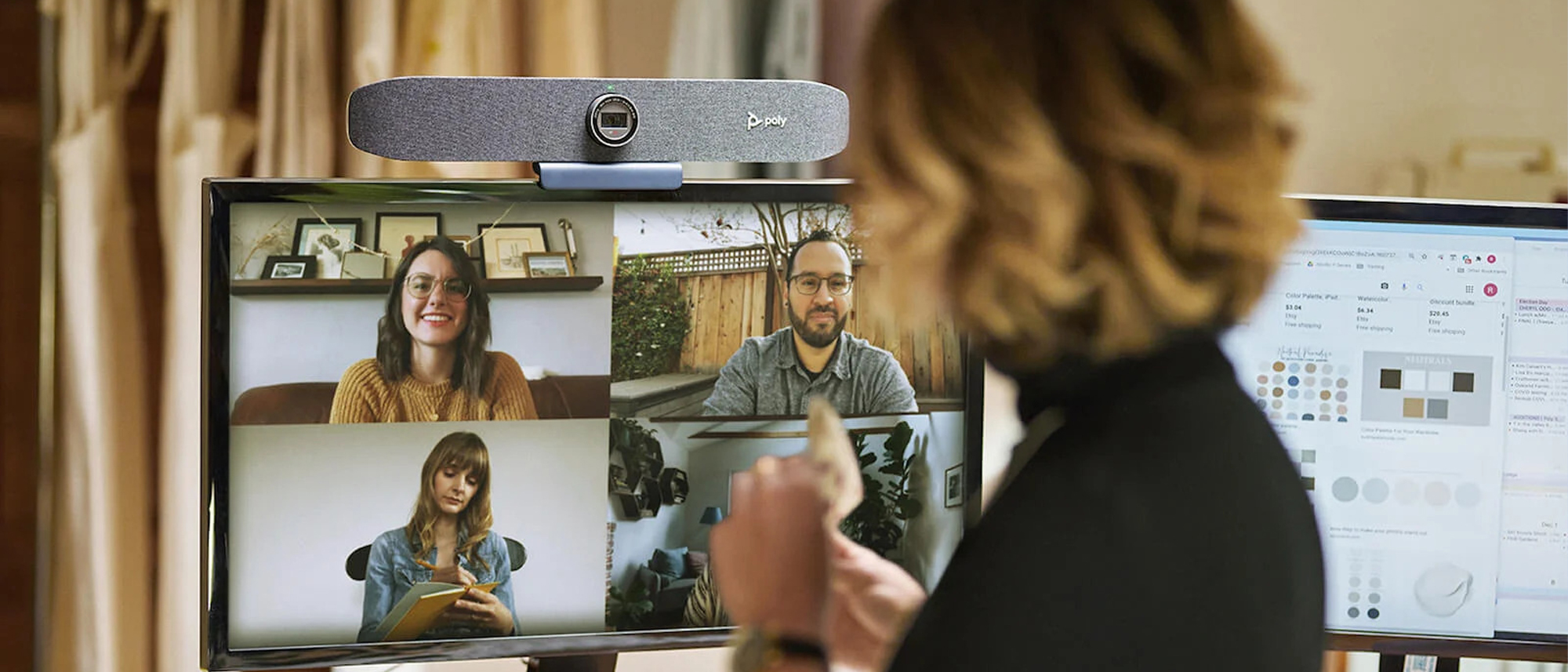
Poly Studio P15 Personal Video Bar — $599
If you want to go full send and invest in a near-professional video conferencing setup, the Poly Studio P15 has everything you need.
It’s a large video bar that sits on top of your monitor. It records in 4K and has built-in speakers and a high-quality microphone. For most home offices, it’s an expensive product that you almost certainly do not need, but if you’re happy to spend a little extra it’s a powerful home office upgrade.

Soft light desk lamp
Working at a computer all day puts a lot of strain on your eyes. This is particularly prevalent at night. Investing in a good quality soft-light desk lamp can help to avoid the perils of bad lighting and screen glare and reduce strain on your eyes. Try to avoid cheap bulbs that emit too much blue light which can disrupt your circadian rhythms and your sleep. Instead, opt for more natural and warmer light or a lamp specifically designed for desk use.
Best budget desk lamps
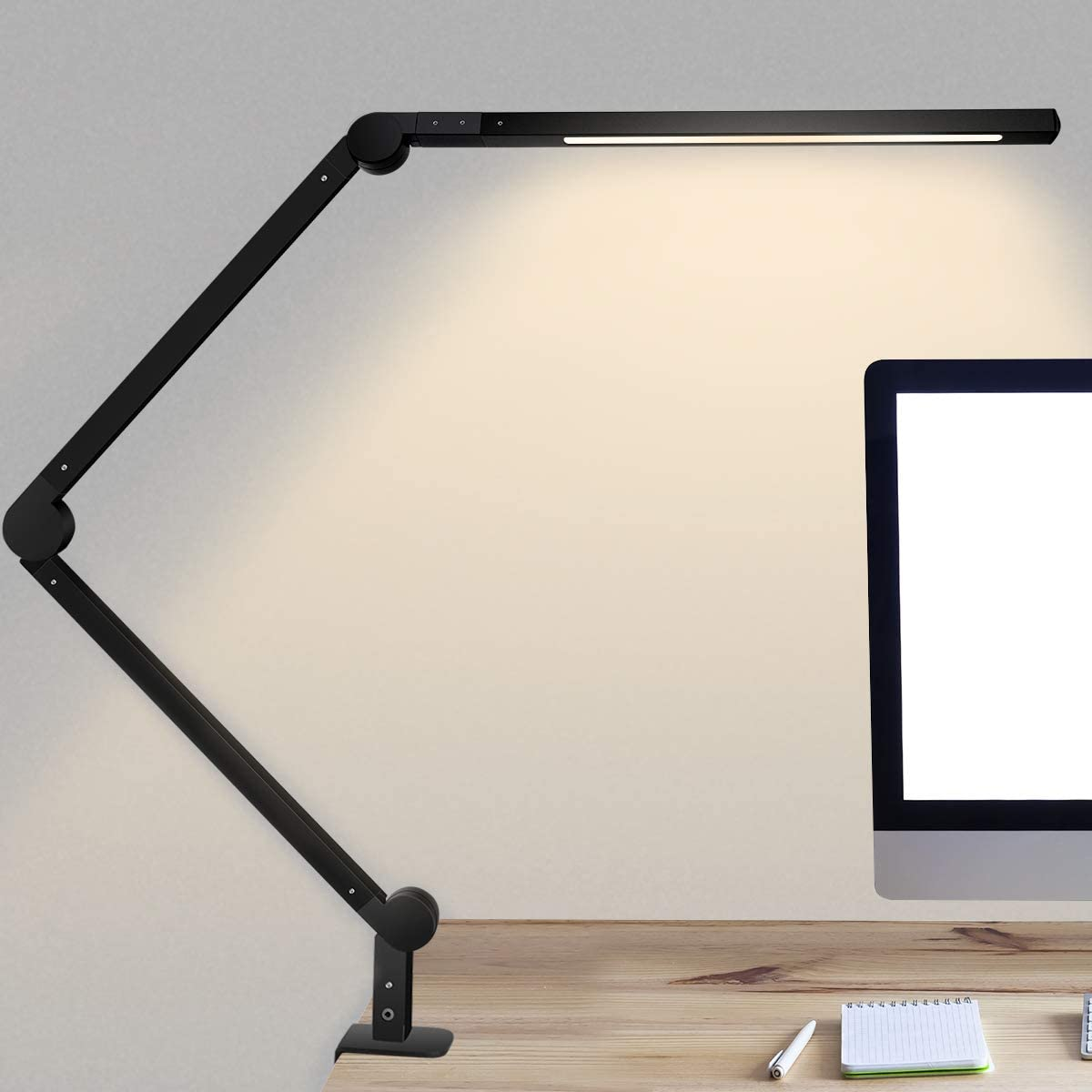
Dimmable Architect Workbench Lamp — $47.99
This is a super affordable clamp-style desk lamp that won't take up too much space on your desk. It uses low-energy LEDs and different color temperature modes for different times of the day.

IKEA FORSÅ — $26.99
For a super simple, affordable, and highly-adjustable work lamp, you can’t go wrong with this industrial-style lamp from IKEA.
Best high-end desk lamp

BenQ e-Reading Desk Lamp — $229
If you’re looking for a high-end desk lamp, the BenQ eReading Lamp is the best option because it is infinitely customizable. Depending on the time of day or what kind of work you’re doing, you can easily switch from warm to cooler tones and BenQ’s built-in smart lighting tech automatically adjusts the brightness to ambient light.
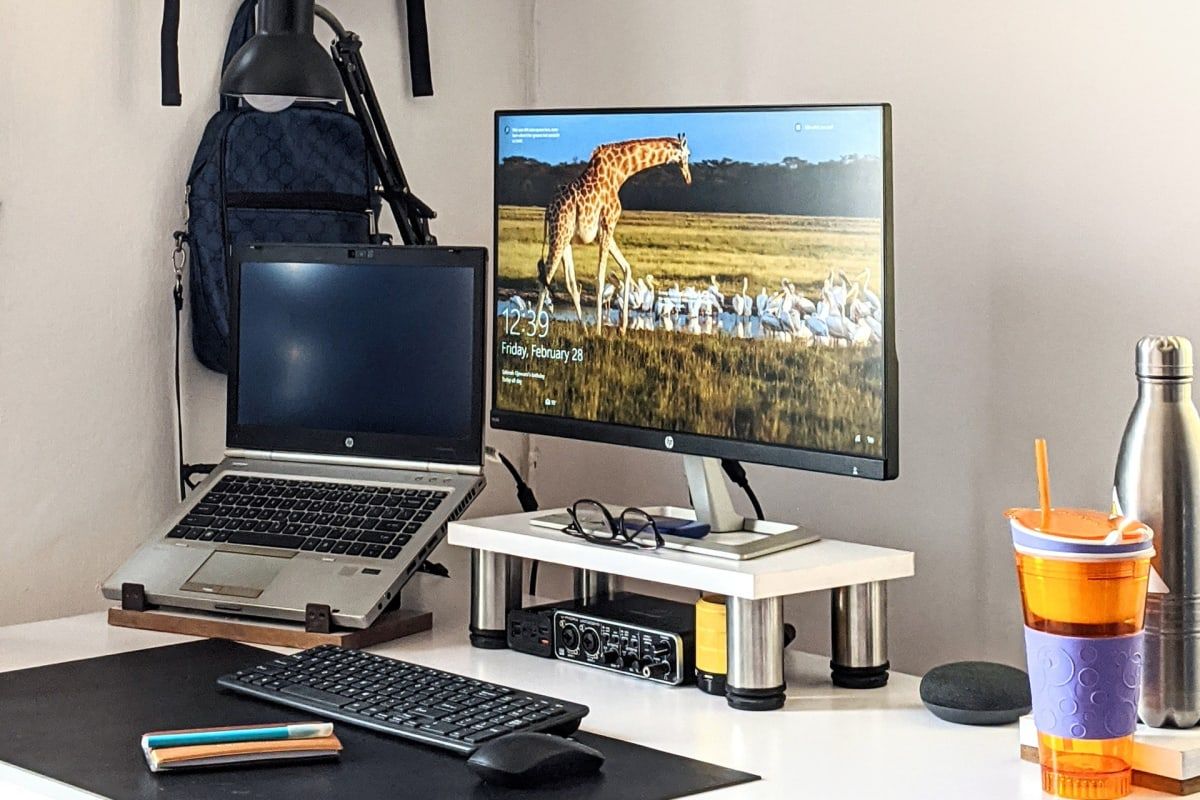
Laptop stand
Investing in a laptop stand raises your laptop's screen closer to eye level, which is better for posture and ergonomics. If you’re using an external monitor, a laptop stand also allows you to position your laptop to act as a second screen for emails or Slack.
It’s probably time to upgrade from that stack of old books — here are some great options that won’t break the bank.
Best budget laptop stands

Rain Design mStand — $44.90
Designed specifically for Apple MacBooks, the mStand is a super popular laptop stand because it is high-quality and looks great with a minimal design. While it’s not super-adjustable, we’ve found it’s the perfect height and a great no-frills option to bring your computer up to eye level.

Soundance Laptop Stand — $33.99
Very similar to the Rain Design mStand, this laptop stand is made from high-quality aluminium and fits all laptops. It’s a great budget option and comes in a bunch of different colors.
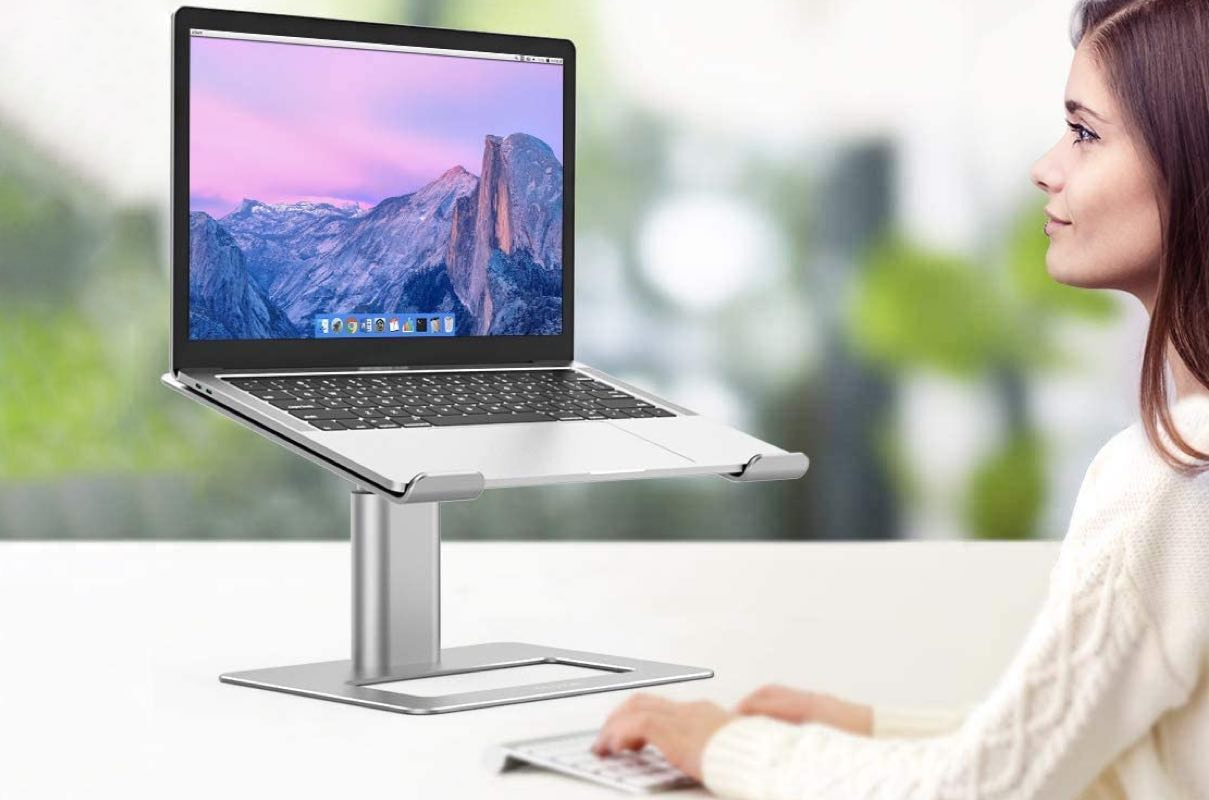
Besign LSX3 Aluminum Laptop Stand — $29.99
While it may not look as minimal as the previous two, this laptop stand is height-adjustable for better ergonomics. It’s made from thickened aluminum and designed to fit any laptop size.
Best premium laptop stand

Grovemade Wood Laptop Stand — $170
If you’re looking to spend a little extra, this laptop stand from Grovemade is a beautiful upgrade to any home office. It’s available in American black walnut or maple.

Whiteboard
It’s easy to get tunnel vision when working at a computer. There has been a recent boom in virtual remote collaboration tools that help distributed teams collaborate and visualize ideas. Miro, Mural, and Figma are a few examples. But what about physical whiteboards for individual problem-solving? If you haven’t tried incorporating a whiteboard into your workflow, this might not make a lot of sense but hear us out...
Studies show that writing by hand on a whiteboard sharpens brain function, enhances learning, and may even help people to think more positively. The massive surface of a whiteboard encourages you to think about problems from a more holistic perspective and sequential hand movements help to activate other parts of the brain responsible for thinking, problem-solving, and working memory.
Incorporating a whiteboard into your home office introduces a more dynamic approach to thinking through problems and allows you to create mind maps and other planning tools that open your thinking to see the “big picture”.
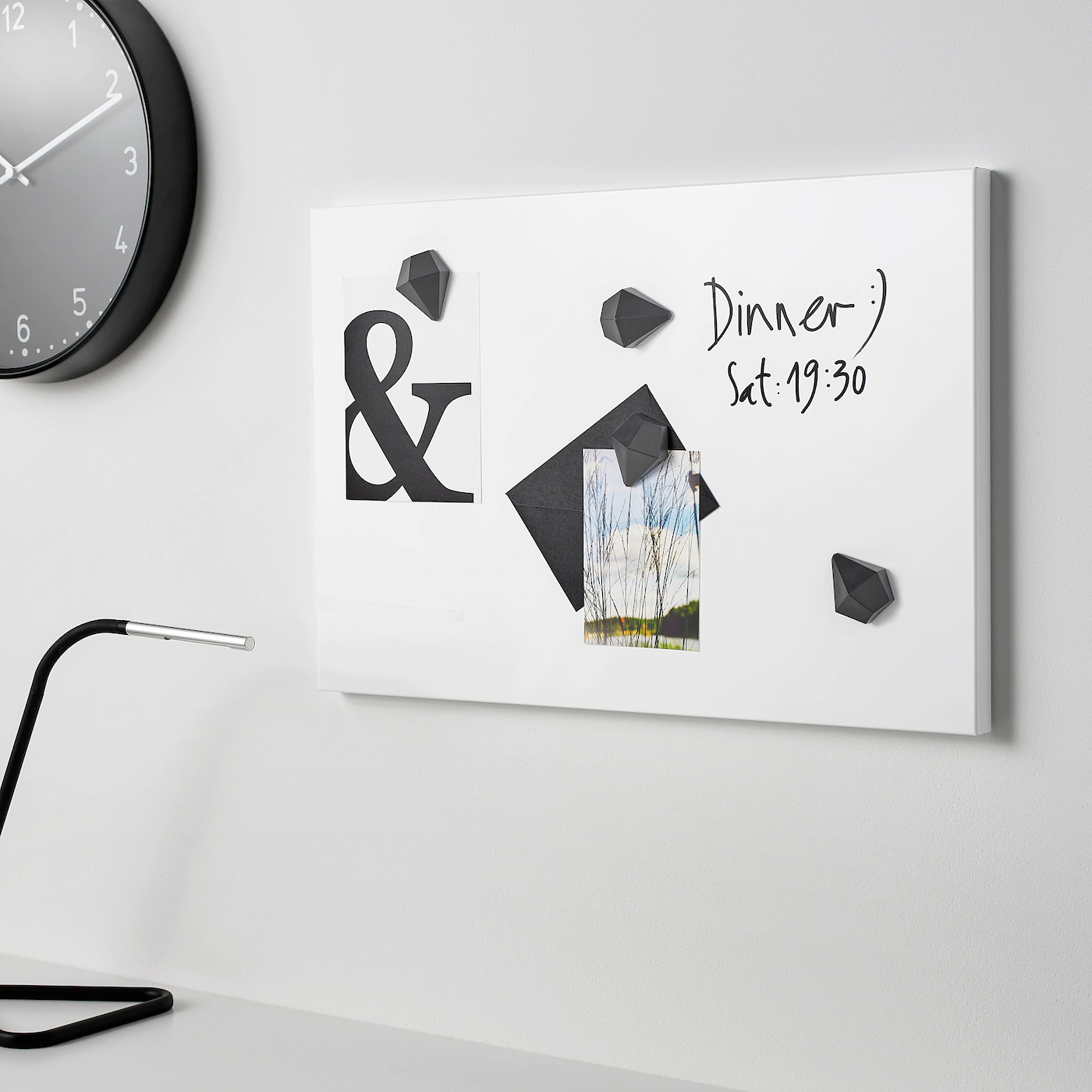
IKEA SVENSÅS Memo Board — $9.99
This super simple memo board from IKEA is the perfect solution for an in-office whiteboard. At just $10, it’s affordable enough to trial to see how it fits into your workflow and at 23½” x 15¾” (60cm x 40cm) it doesn't take up much space. Pick up some magnets for $2.99 as well to pin important documents and reminders for yourself.
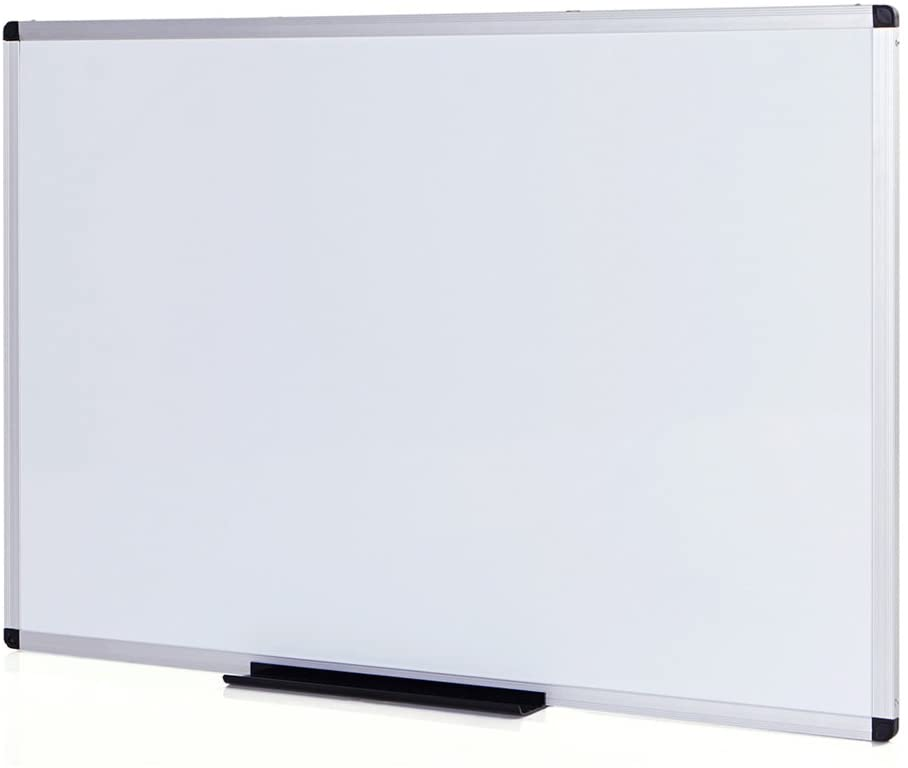
VIZ-PRO Magnetic Dry Erase Board — from $26.90
For a larger whiteboard, this aluminum frame from VIZ-PRO is super affordable and comes with a storage tray. It comes in a bunch of sizes from 24” x 18” all the way up to 96” x 48”.

Desk mat
There's something to be said for having a good work surface. If you’re working from an older desk or a desk not designed as a mouse surface, investing in a simple desk mat is a great home office upgrade. Desk pads not only elevate the look of your workspace, but they have practical benefits by protecting the top of your desk from scratches and spills and offering some padding for your wrists and arms.
Best budget desk mat

Aothia PU Leather Desk Pad — $16.99
For less than $20, you can’t go wrong with this faux leather desk pad from Aothia. The 31.5” x 15.7” size is large enough to comfortably fit your keyboard and mouse and is made of a water-resistant PU with a non-slip bottom. A 1-year warranty is included.
Best premium desk mat

Grovemade Matte Desk Pad — $60
This is our favorite for two reasons: look and quality. The Matte Desk Pad from Grovemade is made from natural linoleum with a layer of cork. The Grovemade logo is embossed in black, which gives it a minimal and clean look.

ULX Desk Mat — $89
Similar to the Grovemade, this desk mat from ULX store is designed to be clean and minimal. It’s also made from PU (faux) leather and is the perfect understated option. It comes in brown and gray as well.

Plants and succulents
Adding some greenery to your home office helps to bring nature inside and lift your mood. Adding plants into your home office space aren’t just nice to look at, they’re good for boosting productivity by subtly boosting your mood and self-esteem. According to a 10-year study by psychologists at the University of Exeter, plants can boost your productivity by up to 15%!
If you’re notorious for killing plants or haven’t taken care of them before, don’t stress. Some types of plants such as succulents, snake plants, and aloe can thrive in the most neglected conditions.
We recommend ducking down to your local plant nursery for the best advice. Take a few photos of your office space and show the trained staff what kind of lighting you have to work with and they’ll be able to recommend the best options for your home office. Here are a few favorites of ours:
Best low-maintenance indoor plant

Snake Plant / Variegated Laurentii
Besides looking cool, Snake Plants are relatively low-maintenance and can survive droughts (another name for neglect). While they prefer bright, indirect light, they can survive just fine in lower light levels as well. They also filter out chemicals in the air, helping to purify your workspace.

Rubber Tree / Rubber Fig / Ficus Elastica
Rubber Trees are a great-looking indoor plant with thick, glossy leaves that range from a rich burgundy red to almost black. They’re pretty tolerant to some neglect but don’t love change so — so pick a well-lit spot and it should thrive with semi-careful watering!

Swiss Cheese Plant / Monstera Deliciosa
Another popular and inexpensive option is the Swiss Cheese Plant. These trendy plants are super eye-catching, grow fast, and don’t need a whole lot of maintenance: you only need to water every one to two weeks when the soil dries out. Once this plant gets going, it thrives, so we recommend staking it to ensure it grows upright.

Water jug or sparkling water creator
You likely aren’t drinking enough water, but you knew that already. What you may not know is that not drinking enough water has a negative impact on your cognitive performance, mood, and energy.
Keeping water at your workspace acts as a visual cue to remind you to drink water throughout the workday, but it also deters you from breaking your focus too much to get a glass of water. A 2013 study showed that drinking water can result in a 14% increase in productivity.

IKEA 365+ Pitcher — $7.99
For less than $10, this pitcher from IKEA is a steal. It’s simple, looks great, and is made from durable heat-resistant glass. It also holds 51oz (1.5L) which is the perfect size.

Aark Carbonater 3 — $219
If you’re a fan of spicy water, this minimalist Swedish-designed stainless steel water carbonator from Aarke is the ultimate home office upgrade. The obvious (and cheaper) choice would be to get something from SodaStream, but we love the Aark because it looks nice enough to display proudly on your kitchen counter.

Air purifier or oil diffuser
A great air purifier or an oil diffuser can really improve your life and productivity. It’s important to note that these are not the same thing: air purifiers filter the air to reduce allergens such as pollen, mold spores, and smog, while oil diffusers distribute essential oils into the air (which can also offer a multitude of health benefits, from decongestion to anxiety relief).
The important thing is that both of these devices help to cultivate a more pleasant work environment for your home office, allowing you to think more clearly and focus.
Best overall oil diffuser

Muji Ultrasonic Aroma Diffuser — $49.90
This super minimal oil diffuser uses ultrasonic waves to diffuse and disperse essential oils, without the need for heat. We love it because of its simplicity: it looks unobtrusive on your desk and can also double as a lamp with two lighting settings. It’s quiet and has a built-in self-timer to turn itself off if you forget.
Best premium oil diffuser

Henry Wilson x Aesop Brass Oil Burner — $190
If you’re looking for a statement piece that looks beautiful on your desk, check out this collaboration between Australian Designer Henry Wilson and Aesop. It’s a completely unnecessary amount of money to spend on an oil diffuser, but if you’re looking to treat yourself it will last a lifetime. It’s made from solid brass, weighs a tonne, and takes a standard tealight candle you can pick up for most supermarkets or for 13c a pop on Amazon.
Best air purifier
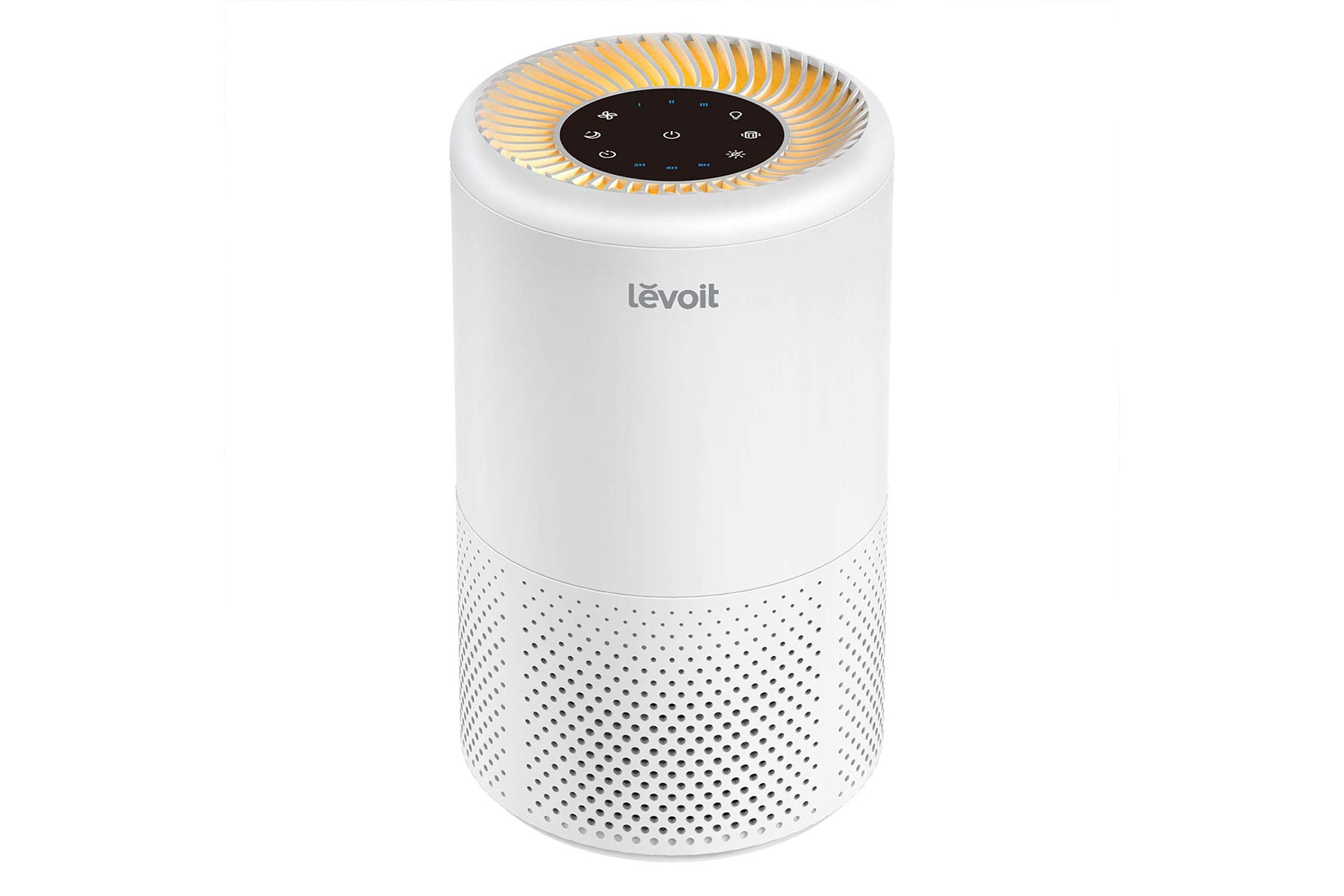
LEVOIT Air Purifier — $100
This air purifier from LEVOIT is the best-selling on Amazon for a reason. It’s simple, looks nice, is relatively affordable, and has a strong 4.7-star rating. Unlike many air purifiers, this one is small enough to fit in your home office and quiet enough to operate without distracting you.

Wall art
Is wall art necessary? Probably not, but anything you can do to help make your space look and feels great is going to boost your mood and productivity. Wall art doesn’t have to be expensive and you don’t need to know anything about art! You can pick up prints that are relatively inexpensive and still support the artist who originally created them. The only rule is that you like it — art is 100% subjective, so have fun and pick out something you’ll cherish for years. Here are a few of our favorites that are affordable.

Composition by Mae Studio — $32.68

Floating Leaves by Paper Collective, Moebe & Norm Architects — from EUR €32

Bildudalur by Tom Kondrat — from $75

OTIS by Mande Calhoun-Gaffney — from $29

Curves by Leise Dich Abrahamsen — from EUR €43

Lemon by Anna Mörner — from EUR €43

Waiting by Ian Baguskas — from $35

MEADOW FLOWERS II by Kelly Ventura — from $29

The Blue Cape by Amelie Hegardt — from EUR €29