Asynchronous communication is any communication that does not require an immediate response. One person shares information, and the recipient reads, watches, listens, or replies later when they are available.
The important part is the expectation, not the tool. Email can be asynchronous, but it becomes synchronous if everyone is expected to reply in two minutes. Slack can be asynchronous if replies can wait.
In remote and distributed teams, async communication helps people work across time zones, protect focus time, and keep decisions documented. It also fails when messages are vague, urgent, sensitive, or left without owners.

What is asynchronous communication?
Asynchronous communication means people exchange information without being present at the same time. The sender does not wait for an immediate reply, and the recipient responds after they have time to process the message.
Common examples include email, project comments, shared-document feedback, recorded video updates, meeting recordings, status posts, intranet announcements, and messages that do not require a live back-and-forth.
The opposite is synchronous communication. Synchronous communication happens in real time, such as a meeting, phone call, live chat, video call, or in-person conversation.

Asynchronous vs synchronous communication
The difference between asynchronous and synchronous communication is timing. Async communication happens across time. Synchronous communication happens at the same time.
| Factor | Asynchronous communication | Synchronous communication |
|---|---|---|
| Timing | Delayed response | Real-time response |
| Examples | Email, docs, project comments, recorded updates | Meetings, calls, live chat, workshops |
| Best for | Updates, decisions with context, feedback, documentation | Urgent issues, sensitive topics, complex debates |
| Strength | Protects focus and creates a record | Speeds up clarification and relationship-building |
| Risk | Slow decisions if ownership is unclear | Interruptions, meeting overload, weak documentation |
A message is not async just because it is written. If a manager sends a chat message and expects an immediate answer, the work culture is synchronous even if the tool is Slack, Teams, or email.

Examples of asynchronous communication at work
Asynchronous communication works best when the message can stand on its own. The recipient should be able to understand the context, decision needed, owner, deadline, and next step without asking several follow-up questions.
| Situation | Async example | Why it works |
|---|---|---|
| Project update | Weekly written status post with progress, blockers, and next steps | Everyone can catch up without a meeting |
| Decision request | Document with options, trade-offs, recommendation, and deadline | Reviewers can think before responding |
| Handoff | Loom-style video plus checklist and links | The next person can continue in another time zone |
| Feedback | Comments on a draft, design, spec, or pull request | Feedback stays attached to the work |
| Onboarding | Recorded walkthroughs and searchable handbook pages | New hires can learn without waiting for one person |
| Company update | Intranet post or recorded leadership message | Everyone receives the same context |
| Remote interview prep | Written examples of how you communicate across time zones | A candidate can prove remote-work readiness |
Text messages, direct messages, and chat channels can also be asynchronous. They only stay async when the team has agreed that immediate replies are not required.

Benefits of asynchronous communication
The biggest benefit of asynchronous communication is focus. People can read and respond at planned times instead of stopping every time a message, meeting invite, or call appears.
Async communication also creates a written or recorded history. Decisions, project updates, feedback, and context are easier to search later than a conversation that happened in a meeting and was never documented.
For remote teams, async communication reduces time zone bias. A teammate in Sydney, Berlin, or New York can contribute without joining a meeting at a painful hour.
It also improves inclusion when used well. People who need time to think, write, translate, review data, or manage caregiving responsibilities can contribute with more care.

Disadvantages of asynchronous communication
Asynchronous communication is not always better. It can slow decisions when nobody owns the next step or when a deadline is missing.
It can also create ambiguity. Without tone, facial expression, or live clarification, a short message can sound colder, harsher, or less complete than the sender intended.
Async work can increase information overload if every update lands in a different tool. A team with too many channels, docs, tasks, and threads may document more but understand less.
Finally, async communication can feel isolating. Remote teams still need live moments for trust, coaching, sensitive feedback, celebration, and relationship-building.

When to use asynchronous communication
Use asynchronous communication when the topic does not need an immediate live exchange and the recipient would benefit from time to review, think, or respond in writing.
| Use async when | Use synchronous communication when |
|---|---|
| You are sharing a status update | The issue is urgent |
| You need a documented decision | The topic is emotionally sensitive |
| People are in different time zones | The group needs live debate |
| The work needs deep review | Confusion has continued after one async pass |
| You want input from many people | Relationship-building is the main goal |
| The answer can wait until a stated deadline | The delay would block important work |
A useful rule: start async when you need thoughtfulness, documentation, or time-zone flexibility. Switch to synchronous when speed, trust, nuance, or unresolved confusion matters more.

Asynchronous communication best practices
Good async communication is explicit. The sender should explain the context, the decision needed, who owns the next step, when a response is due, and what happens if the deadline passes.
Set response-time expectations by channel. For example, urgent incidents may require a call, customer blockers may need a same-day reply, and normal project updates may allow 24 or 48 hours.
Write for the person waking up in another time zone. Include links, screenshots, constraints, previous decisions, and the exact question you need answered.
Prefer public, searchable channels for team knowledge. Private messages are useful for sensitive topics, but they hide context that the rest of the team may need later.
Escalate intentionally. If a thread has gone through one clear written pass and people still disagree, schedule a short meeting with a decision owner and agenda.

Copy this async message template
Use this structure when you need a useful response without pulling people into a meeting:
| Field | What to write |
|---|---|
| Context | What happened, why it matters, and links to the work |
| Decision needed | The exact question or approval needed |
| Recommendation | Your preferred option and why |
| Alternatives | Other reasonable options and trade-offs |
| Owner | Who will make or execute the decision |
| Deadline | When feedback is needed and what happens next |
| Escalation | When to switch to a live conversation |
Example:
Context: The customer onboarding checklist is missing security-review steps for enterprise accounts.
Decision needed: Should we add security review before contract signature or after kickoff?
Recommendation: Add it before signature for enterprise deals so expectations are clear.
Deadline: Please comment by Thursday 3 p.m. UTC. If there is disagreement, we will schedule a 25-minute decision call.

How asynchronous communication helps remote teams
Remote teams need async communication because their workday rarely overlaps perfectly. Without async norms, people either wait too long for answers or force meetings across time zones.
Async communication pairs well with remote collaboration best practices because both depend on clarity, documentation, ownership, and trust.
It also supports working across time zones by making the default workflow less dependent on live availability.
Managers can use async updates to reduce meeting load, but they should still create live rituals for coaching, conflict resolution, team bonding, and hard decisions.
If you are building team norms, connect async expectations to your remote work best practices and your remote work policy.

How job seekers can show async communication skills
Async communication is a remote-work skill. Employers want to know whether you can write clearly, work independently, document decisions, and keep work moving when teammates are offline.
On your resume, mention outcomes that prove async collaboration. For example: "Documented weekly project updates across three time zones, reducing recurring status meetings from five to two per week."
In remote interviews, prepare examples of how you handle delayed responses, unclear messages, handoffs, and written feedback. Use the same evidence when answering remote job interview questions.
You can also use async communication as part of your job search. Save clear notes about applications, follow-up dates, hiring-manager replies, and questions to ask before accepting a remote role.
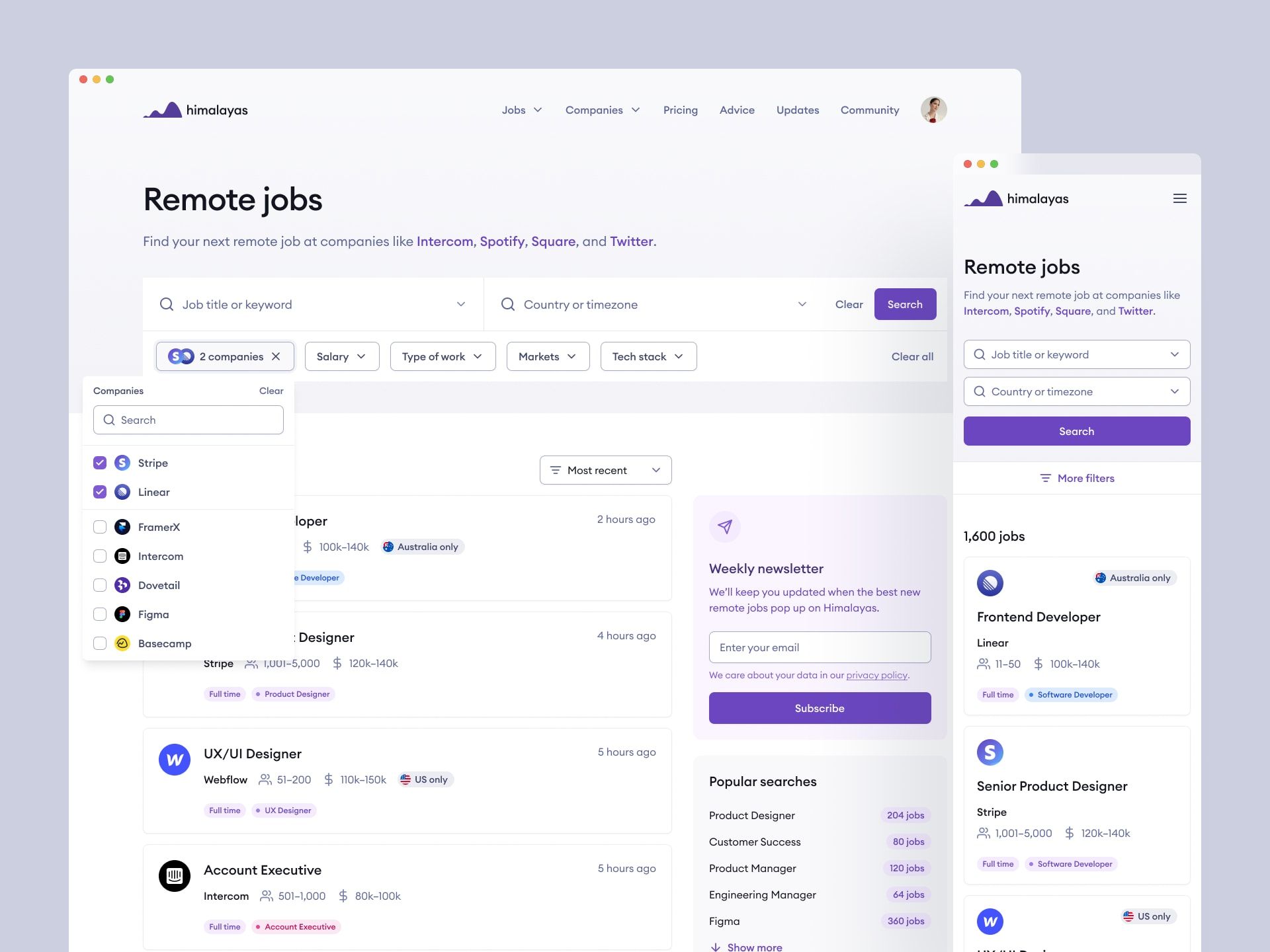
When you are ready to apply, browse remote jobs on Himalayas and look for companies that explain how they communicate, document decisions, and support distributed teams.

Asynchronous communication tools
The best async tool depends on the job the communication needs to do. Do not choose a channel only because it is convenient for the sender.
| Tool type | Best use |
|---|---|
| External updates, formal decisions, longer context | |
| Project management tools | Tasks, owners, due dates, blockers |
| Shared documents | Drafts, policies, specs, decision records |
| Recorded video | Walkthroughs, demos, handoffs, training |
| Knowledge bases | Long-term documentation and onboarding |
| Team chat | Lightweight updates that can wait |
| Forms and surveys | Feedback that benefits from structured responses |
Keep the tool stack simple. If people cannot find decisions later, the team does not have async communication; it has scattered messages.

Asynchronous communication FAQ
What is asynchronous communication in simple terms?
Asynchronous communication is communication where people do not need to respond at the same time. One person sends information, and the other person replies later.
Is texting asynchronous communication?
Texting can be asynchronous if there is no expectation of an immediate reply. If both people are texting back and forth in real time, it is functioning as synchronous communication.
Is Slack asynchronous communication?
Slack can be asynchronous, but only if the team treats messages as non-urgent by default. If everyone is expected to reply immediately, Slack becomes a synchronous interruption tool.
What is the difference between asynchronous and synchronous communication?
Asynchronous communication happens across time. Synchronous communication happens in real time. Async is better for documentation and flexibility; sync is better for urgency, nuance, and live discussion.
What are the disadvantages of asynchronous communication?
The main disadvantages are slower decisions, unclear ownership, misread tone, information overload, and weaker personal connection if the team avoids live interaction completely.
How fast should people respond to async messages?
The team should define response-time norms. A common pattern is same-day for blockers, 24 hours for normal project questions, and 48 hours for non-urgent feedback.
What should not be asynchronous?
Do not rely only on async communication for urgent incidents, sensitive feedback, conflict, ambiguous strategy debates, or topics where people have already misunderstood each other in writing.

Find a remote job on Himalayas
Asynchronous communication is one of the skills that makes remote work sustainable. It helps teams stay aligned without forcing everyone into the same calendar.
If you want a role where thoughtful written communication matters, explore remote jobs on Himalayas. You can filter by role, company, location, and remote-work preferences.
You can also read what remote work means, learn how to find a remote job, and prepare for working from home.