Preparing for an upcoming job interview can be stressful. You've spent countless hours thinking through your next career move, researching your dream job or company, and preparing and polishing your resume and cover letter. All for it to come down to one nerve-wracking meeting.
Your job interview is your one chance to make a good impression, share your skills and strengths, and show the hiring manager that you're a good fit for the job.
Interviews are intimidating. But they're much easier if you've prepared the right way. Thankfully, there are some easy systems and steps you can follow to put you in the best position possible to land that dream job.

To prepare for a job interview, think about the topics likely to be covered and how you can position yourself as the best candidate for a job offer. To increase your chances, make sure you cover the following:
- Research: Learn as much about the company, the company culture, the job and job description, and even the interviewer, their interview process, and what their goals are.
- Plan: Think about your outfit (what you'll wear) and how you'll present yourself (your body language).
- Prepare: Consider the interview process, prepare answers to common interview questions (and follow-up questions), and conduct mock interviews to stand out amongst a sea of applicants.
This article provides a step-by-step guide on how to prepare for your next interview, with tips and sample answers to common interview questions.
Be sure to check out our guides on how to use the STAR method, common remote job interview questions, Zoom interview tips, and how to find a remote job and get hired as well.

Step 1: Research the company
The first step you should take to prepare for a job interview is to thoroughly research the company. The goal here is to develop a deep understanding of the company's culture, values, products goals, and industry.
Researchers at JDP surveyed 2,000+ job seekers and found that they spend an average of 7 hours researching a company before an interview. This highlights how important it is to come prepared, especially in a highly-competitive job market.
Researching the company not only helps you to tailor your interview question answers to the job, but they'll show your potential employer that you're passionate about the opportunity and that you're disciplined and prepared.
The best place to start is with the company's website as it contains valuable information like:
- Mission statement and values: About us and careers pages are a fantastic resource to help you prepare for a job interview. Potential employers share their goals and values to attract the right candidates that will fit in with the company culture. Weaving these values and mission into your own story and interview question answers is an easy way to stand out as a good fit for the job.
- Product or service pages: Learn as much as you can about the company's products and services. If the company sells software, try and spend as much time as you can using it. The more you can learn, the more passionate and knowledgeable you'll come across as in the interview.
- Customer reviews and testimonials: Take this a step further and dive into as many customers' experiences available. Product review sites, YouTube, and social media are all great places to start. Reading reviews and testimonials is a great way to better understand the company and their competitors.
- Interviews: Interviews, podcasts, YouTube videos are invaluable resources for interview preparation. Many companies encourage their employees and management to participate in interviews and podcasts because they're a great recruiting tool. As a job seeker, they're a secret weapon in your job interview preparation because they're always packed full of insights about the company culture and their plans that most job candidates won't hear about.

Here are some other valuable and unconventional resources to help research your potential employer:
- AngelList: A tech & startup job board with thousands of company profiles.
- Crunchbase: Crunchbase is a platform for finding business information about private and public companies.
- Glassdoor: Glassdoor is a great place to find what current and former employees think about the company.
- Linkedin: Linkedin can be a cheat sheet for learning more about a potential employer's organizational structure. You can use it to find out who you'll be working alongside and learn more about them, including any interviews they've done or helpful content about the company they've written.
- Himalayas: A remote job board with in-depth company profiles on thousands of remote companies. Our company profiles outline what each company does, its tech stack, and employee benefits.
- Employee handbooks: If the company has a public employee handbook, you've struck gold. Not only will this knowledge help you shape your definition of success for the role, but it'll help you prepare some insightful questions of your own.
Having a deep understanding of the company's tech stack — tools and software they use — is a good idea because it will help you focus on where your skills overlap in your answers to interview questions.
Last but not least, explore your professional network. If you know any employees that work or have worked for your potential employer, reach out to them! They may be able to share insights about what the company is looking for, what it's like to work there, and they might even be able to recommend you prior to your interview! This will give you a significant edge over other candidates.
Researching a company takes time, but it's worth the investment and gives you the best chance of making a good impression on the hiring manager and landing a job offer.

Step 2: Research the job description
This might seem obvious, but you'd be surprised how few candidates do this. You need to understand exactly what the hiring manager is looking for when preparing for a job interview and your most valuable asset to do this is by reading the job description.
Potential employers want to find candidates that are a good fit for the job. They don't want to waste their own time or the time of potential candidates. As such, they carefully write job descriptions to attract the right candidates. The job post contains the position's duties, responsibilities, and purpose.
During this step, write down any mentions of strengths, skills, responsibilities, and expectations that the potential employer is looking for. There might even be hints for common interview questions you can prepare for in the job description.
All of this is invaluable information when preparing for a job interview. By making sure you address all of these in the interview, you can show the hiring manager that you're prepared and have done your research — these are all indications that you have the ability to do the job and that you're the best fit.
Tip: If you have to provide a cover letter or a resume as part of your application, it's a good idea to include the strengths, skills, and responsibilities in your writing. Large employers often use automated screening software and dropping these keywords in can help you not only pass the screening process, but they might even flag you as a highly-relevant candidate.
For example, if you're applying for a remote web developer job, chances are the job description is going to mention particular skills and technologies that are a good fit for the job: React, CSS, JavaScript, Tailwind. Highlighting that you have these skills is a good opportunity to get ahead right from the start and show the hiring manager you're a good fit.

Step 3: Make sure you understand the STAR method
During a job interview, the interviewer will likely ask behavioral interview questions. These questions focused on how you act in certain situations and help the interviewer assess how you handle stress, what your strengths and skills are, and how you would conduct yourself in a professional environment. Above all, they give the interviewer an insight into who you are as a person and help them understand whether or not you'll fit into the company culture.
When preparing for a job interview, it's a good idea to prepare for behavioral interview questions by learning the STAR interview method. Behavioral questions are often open-ended and can be the hardest to answer, but understanding how to use the STAR method gives you the best chance of success and landing that job offer.
Recalling a situation when you've demonstrated your strengths, skills, and experience is far more compelling than simply saying you are a good fit. Using the STAR interview method is an easy and effective way to structure your answer with an example.
STAR is an acronym:
- Situation: Describe the situation as it forms the basis for the rest of your answer.
- Task: Outline your goals or problems.
- Action: Describe the steps you took to solve the problems or achieve your goals.
- Result: Explain the consequences of your actions and how you contributed to the company. Where possible, quantify your impact.
Once you understand how to use the STAR method to structure your answers, you can use the research you've done in the first two steps to prepare answers to common behavioral interview questions.
Always remember: the interviewer is looking for the candidate that is the best fit for the job. Now that you've done your research and understand what the company is looking for, all you have to do is ensure your answers make this as clear as possible.

Step 4: Prepare answers to interview questions
Don't be caught off-guard by common interview questions. There is no excuse for being unprepared, even if don't expect it to be asked in the interview process.
While being underprepared for a question in an interview question can feel inconsequential at the time, you never know when it might be the deciding factor between you and another candidate.
Thankfully, most interviews are pretty conversational so as long as you've done your research you can still make the best impression. You may even be given a list of questions and conversational topics to expect. If not, it's totally fine to ask the hiring manager if there's anything, in particular, you should prepare for prior to your interview.
Even if they're not listed, can expect a few common job interview questions so it's important to prepare answers for these so you're not caught out. Remember, the most important thing to remember is that your answers should be as relevant to the company and the job description as possible. They should show clearly that you have the right strengths, skills, and experience to make you a good fit for the job.
Check our list of common job interview questions and behavioral interview questions to prepare for, as well as our growing library of in-depth guides to common interview questions.
Here are a few commonly-asked questions with example answers:
- How to answer "Tell me about yourself"
- How to answer "What can you contribute to this company?"
- How to answer "What is your greatest strength?"
- How to answer "What is your greatest weakness?"
- How to answer "Why do you want this job?"
- How to answer "Why are you looking for a new job?"
- How to answer "What can you contribute to this company?"
- How to answer "Where do you see yourself in 5 years?"
If you have a gap in your employment history, that's totally fine! Most people have been unemployed at some point in their working life and hiring managers understand this. Just make sure you prepare to address any gaps in your knowledge or experience. Think about what you learned or gained during that time and be ready to frame the gap in a positive light.
We've written an in-depth guide on how to explain gaps in employment in your resume, cover letter, and interview.

Step 5: Practice interviewing
Don't wait until the real thing to practice your answers in an interview. This might feel silly, but it's an invaluable step in the process. Mock interviews are a great way to rehearse and internalize your answers. With more practice, you'll also find your confidence will grow and you'll be less nervous about the impending interview.
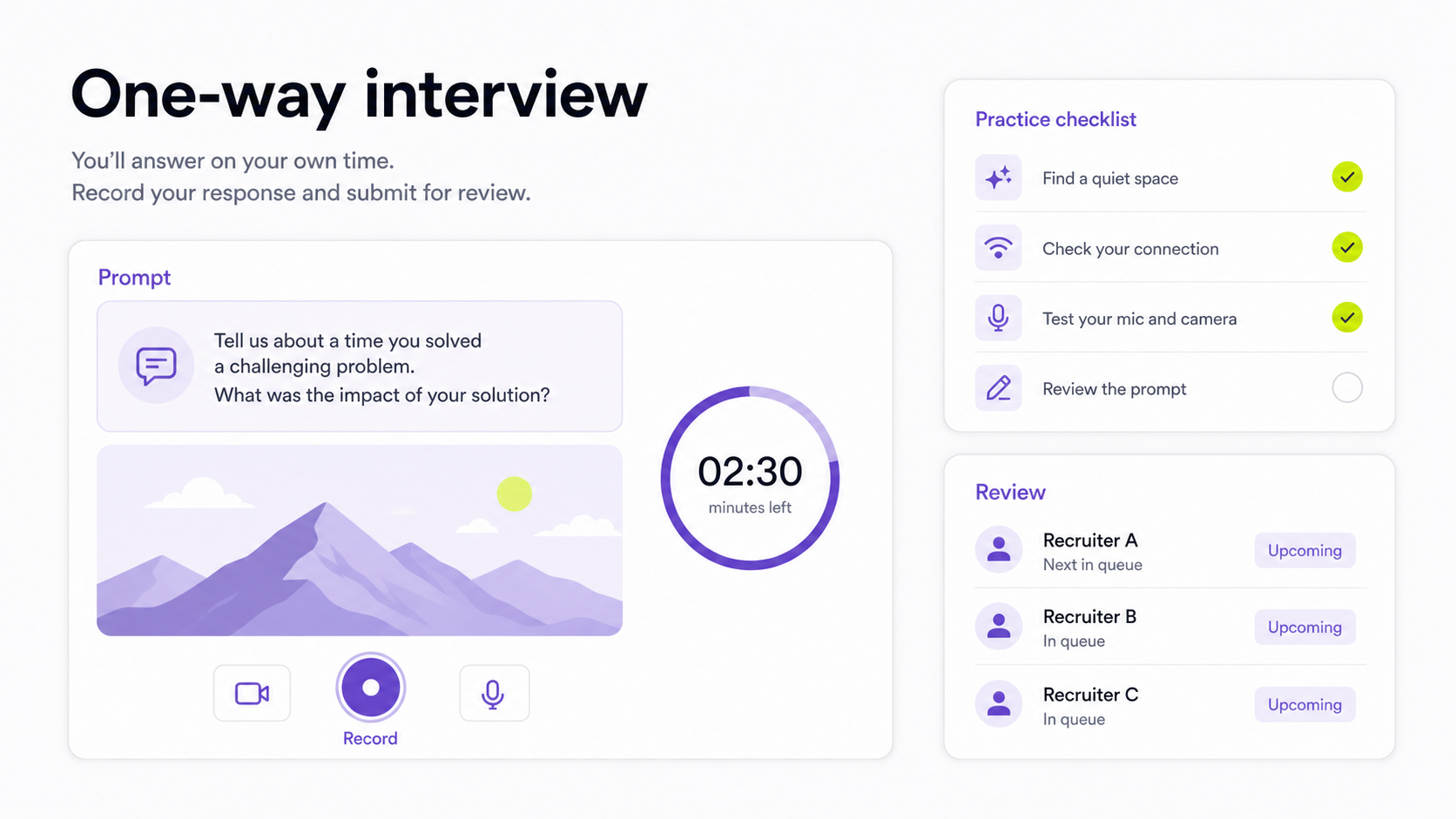
Use an AI interview tool to practice common and tailored interview questions in a pretend interview setting. Keep practicing until you can answer confidently and concisely.
Finally, ask the person you're practicing with to give you candid feedback about how you did! Improve your answers and try again until you're confident.
We've written a helpful guide on how to get the most out of mock interviews.

Step 6: Present your best self
This can be a bit of an afterthought, but always remember to spend some time on your presentation prior to a job interview. This includes how you dress and your posture and body language, as well as your punctuality and manners.
Regardless of the type of job you're interviewing for, presentations and first impressions matter. They might not feel important, especially if it's a remote job, but hiring managers pay close attention to these details — they can reveal much about a candidate and what kind of professional worker they are likely to be.
Thankfully, this is the easiest step in the process!

Dress appropriately for your interview
To understand what to wear, check out the company's website, about page, and social media to get a feel for their dress code if you don't know already. If in doubt, it's always safe to wear a neat and well-fitted business casual outfit to a job interview.

Watch your body language
Keep your posture and body language in mind during your preparation for the job interview. Mock interviews are a good place to practice your posture and body language as well. It's important to communicate that your actively listening, engaged, and excited about the opportunity.
During the interview process:
- Shake hands firmly
- Maintain eye contact with the interviewer
- Speak clearly and confidently
- Sit up straight
- Pull your shoulders back
- Pay attention and look interested
- Try not to fidget
- Turn off your phone so it's not a distraction
Tip: Make sure you're polite and professional to everyone you interact with during the interview process. Hiring managers will often ask their team — office managers, assistants, secretaries, or other employees — for their first impressions of you. Make sure it's a good one, especially if you'll be working with that team soon!

Punctuality matters
Finally, make sure you arrive on time. Running late to an interview is the easiest way to make a bad impression on the hiring manager and communicates you're unorganized at best and that you don't respect their time at worst. Arrive at the destination as early as possible and present yourself to the reception or hiring manager 10 minutes prior to the interview.

Be authentic
While it's important to present your best self, try to remember to be as authentic as possible when answering questions and talking about your interests, background, and experience.
Catering too much to what you think the interviewer's interests and expectations are can come across as disingenuous and may even harm your chances of landing a job offer. Just remember to relax and always be honest and genuine.

Prepare for a virtual interview
For virtual or remote job interviews, presentation is just as important. You'll also need to consider your video and audio quality, lighting, and setting/background to make sure they're clear and professional. Choose a background that is not distracting and a room that is quiet for your interview ahead of time. Join the Zoom or Google Meet link 10 minutes prior to your scheduled time.
You'll also need to test your technology before the interview. At least a day before your virtual interview, ask a friend or family member to conduct a mock interview so you can test your audio and video quality, as well as your internet stability.
For a more detailed guide on how to succeed in a virtual job interview, check out our in-depth guides:

Step 7: Prepare your own questions for the interviewer
This step is often overlooked by candidates but it's a good idea to prepare some questions of your own for the interviewer. Your interviewer will ask something like, "Do you have any questions for me?"
Interesting and well-thought-out questions at this stage of the interview process help you stand out from other candidates. Preparing your own questions not only shows you've done your research but that you're genuinely interested in the opportunity. They also help to engage the interviewer in conversation and build a relationship (rather than just a stale one-way conversation).
We've written a detailed guide on how to respond to "Do you have any questions for me?" with tips and examples of questions you can ask.

Step 8: Follow up after the interview
Even if you don't think the job interview went well, always follow up with a thank you email to the hiring manager and anyone else involved in your interview. Not only is this a nice professional courtesy, but it's also an easy way to make your interview more memorable and reiterate why you're a good fit for the job.
Thank the interviewer(s) for their time and reiterate briefly why you're a good fit for the job and that you're interested. Also include any critical information to the potential employer that they might need or that you discussed in the interview: anything that makes it as easy as possible for the hiring manager to review your interview and contact you again.
If you don't hear back from the hiring manager after a few days, it's a good idea to send a polite follow-up email.
We've written a helpful guide on how to write follow-up emails after an interview, with best practice examples and templates you can use.

Find a remote job on Himalayas
Himalayas is the best place to find remote jobs and hire remote employees. We're focused on providing a job search and hiring experience with great UX focused on speed and efficiency.
Apply privately to 2,000+ remote jobs and discover 1,600+ remote companies. We make it easy to filter by time zone, visa restrictions, and roles so you can easily find remote companies that want to hire you based on your skills and where you live.
We'd also love for you to join our free remote work community.